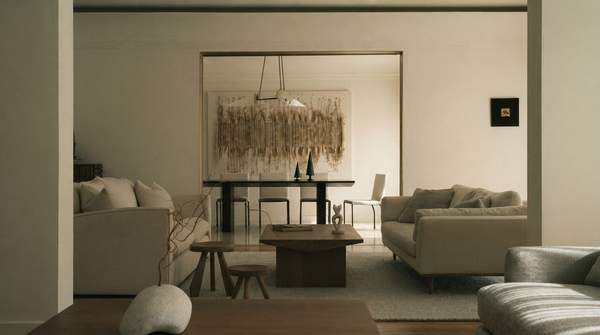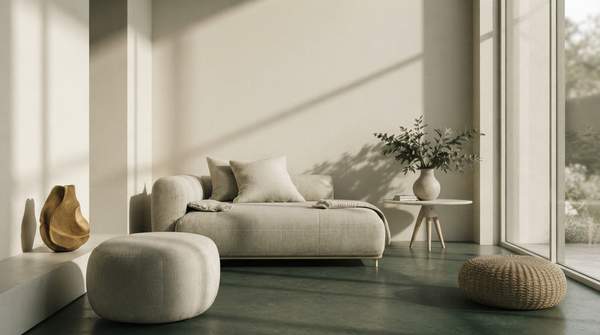
Wabi-sabi is a Japanese philosophy built on three pillars—imperfection, impermanence, and incompleteness—and applying it to interior design means choosing natural materials that age gracefully, keeping objects with visible flaws or history, and arranging rooms with restraint so calm can take root. It is not a decorative style so much as a way of seeing, one that finds beauty in the chipped bowl rather than the flawless one. The practical payoff is a home that feels honest and serene rather than staged.
Understanding Wabi-Sabi: A Philosophy of Imperfect Beauty
Wabi-sabi is rooted in Zen Buddhism and the Japanese tea ceremony, where humble tea bowls with uneven shapes and visible wear were cherished precisely for their character, as Chiara Rossetti explains in her design writing on the philosophy's three key principles. Those pillars—imperfection, impermanence, and incompleteness—guide how the philosophy values objects, art, and even life choices. The question Rossetti poses captures the inversion at its heart: can a chipped bowl teach you to see beauty in flaws?
Design writers describe wabi-sabi as increasingly resonant in a fast-paced, perfection-driven world because it advocates for interiors that show the beauty of aging and the allure of the naturally imperfect. L'Antic Colonial, a design firm writing on the style, frames it as "a way of looking at and inhabiting the world with greater awareness, sensitivity, and respect for the passage of time"—not a decorative formula. Its basic principles, as the firm summarizes them: order is peace, imperfection is beautiful, the old is sustainable, and simplicity is essential.
Wabi-Sabi vs. Conventional Design: A Decision Framework
Because wabi-sabi inverts so many familiar design instincts, the clearest way to apply it is to see where it diverges from conventional Western ideals. The framework below contrasts the two across five dimensions, drawing on descriptions of wabi-sabi's tenets and the contrasts those descriptions imply with perfection-seeking, newness-valuing design conventions. Use it to test any candidate object or arrangement: a piece of furniture, a color, a decorative item.
| Dimension | Wabi-Sabi Design | Conventional Western Design |
|---|---|---|
| Design Goal | Serenity, authenticity, and connection to nature through humble simplicity | Visual perfection, grandeur, or making a bold statement |
| Attitude Toward Aging | Embraces wear and patina; each mark tells a story and adds character | Seeks to hide signs of wear, preferring newness and pristine condition |
| Material Preference | Natural, raw, humble materials—wood, clay, linen, stone—with visible textures and subtle flaws | Polished, synthetic, or highly processed materials aiming for uniformity and sleekness |
| Symmetry & Order | Asymmetry, organic forms, and natural balance with breathing room | Symmetry, geometric precision, and structured arrangements |
| Source of Beauty | Imperfection, history, and the evidence of time and craft | Newness, flawlessness, and machine-made precision |
The right-hand column is largely implied by contrast—sources describe wabi-sabi by naming what it rejects, such as the typical desire for flawless items. That is still useful: if a design choice reads as flawless, brand-new, symmetric, and synthetic, it points away from wabi-sabi regardless of how tasteful it is.