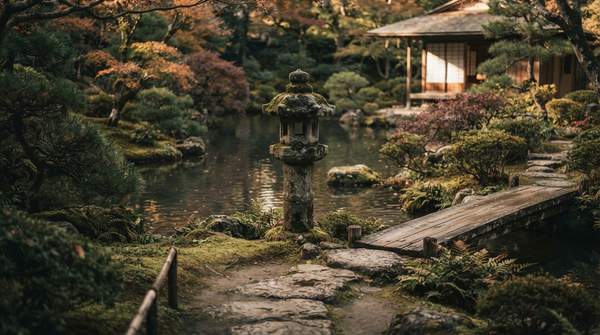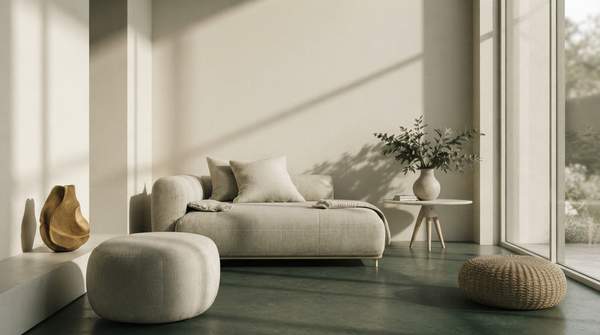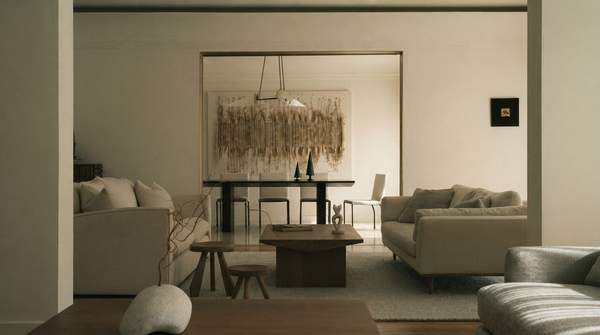
Wabi-Sabi is a centuries-old Japanese worldview built on accepting imperfection and impermanence, and it translates into interiors through a few concrete commitments: natural materials that show the passage of time, muted earthy tones, few but meaningful objects, and a willingness to let wear become part of a room's beauty rather than a flaw to hide. Applied to a modern home, it becomes less a decorating style than a decision process. This guide sets out that process, organized around the two principles the design literature defines most fully — Kanso (simplicity) and Fukinsei (asymmetry) — and then walks through the four practical areas where those principles do their work: material selection, color palette, object curation, and embracing imperfection.
Understanding Wabi-Sabi: A Philosophy of Imperfect Beauty
At its core, Wabi-Sabi asks us to find contentment in our environments as they are. The Interior Design Institute describes it as an ancient Japanese philosophy celebrated for its simplicity and authenticity, one that is increasingly resonant in a fast-paced, perfection-driven world. By advocating for interiors that show the beauty of aging and the allure of the naturally imperfect, the philosophy fosters a deeper connection to the everyday and a more sustainable approach to living.
What distinguishes Wabi-Sabi from other minimalist traditions is its relationship to time. Where most design movements chase the new — the unmarked surface, the crisp edge, the current trend — Wabi-Sabi orients toward transience. Decorilla's design guidance traces the aesthetic's principles to appreciating transience in nature, which is why a weathered plank or a softened linen throw reads as more authentic, not less valuable, than its pristine equivalent.
Houzz's guide to the philosophy makes the same point from the object side: pieces that "own a past," exemplified by cracks and scratches, are indicators of Wabi-Sabi design. Period furniture aged to a beautiful patina, or a lime-washed wall that has begun to peel, are offered as the kinds of elements that give a space character and let it tell its own story.