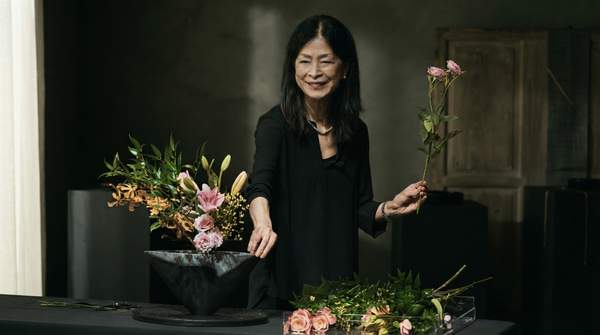
Ask someone to name the major schools of Japanese flower arranging and you will usually hear three: Ikenobo, Ohara, and Sogetsu. They are not interchangeable. Ikenobo, established in the 15th century, is the oldest and most disciplined of the schools, built on classical forms and strict rules of placement. Ohara, founded in the late nineteenth century, turned the art toward natural scenery, introducing the low, wide moribana container. Sogetsu, founded in 1927, broke with tradition altogether, insisting that ikebana can be created by anyone, anywhere, with any material. Understanding these three traditions is the fastest way to move from a general appreciation of ikebana to a real fluency in it.
Ikenobo: The Classical Tradition
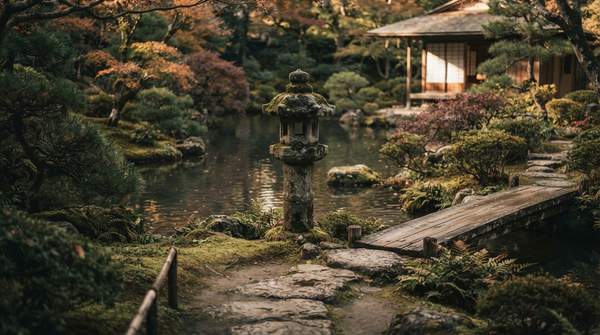
Ikebana itself is far older than any school. The practice grew from Buddhist offerings, and its arrangements were originally placed in the tokonoma, the recessed alcove of a traditional Japanese home, where meaning and personal expression were conveyed through carefully positioned materials. What became the Ikenobo school crystallized in the mid-fifteenth century, when the Buddhist priest Senkei Ikenobo gave the practice its first formal structure. It is recognized as the original school of ikebana.
Its philosophy is the most explicitly spiritual of the three. As the school's own teaching puts it, "Not only beautiful flowers but also buds and withered flowers have life, and each has its own beauty. By arranging flowers with reverence, one refines oneself." Two classical themes anchor its curriculum: rikka, which expresses the beauty of a natural landscape, and shoka, which captures the essential character of a plant in its natural environment. Of all the schools, Ikenobo is described as the most disciplined, with very specific rules for how materials are placed.
Ohara: Embracing Natural Landscapes
When Japan opened itself to the world in the late nineteenth century, Western flowers began arriving in the country — brightly colorful blooms that the older vertical styles could not easily accommodate. Unshin Ohara, working in the Osaka-Kobe area, responded by developing a style meant to express the beauty of natural scenery itself. The Ohara School was born from that encounter between Japanese tradition and Western influence.
Its signature innovation was moribana. Unlike the vertical, standing arrangements of the past, moribana uses a flat, plate-like container called a suiban, in which flowers are piled up freely to suggest a landscape. The style proved decisive: it was subsequently adopted by most other ikebana schools and has become mainstream across the entire ikebana world. The school's philosophy emphasizes seasonal qualities, natural growth patterns, and the beauty of natural environments — arrangements often depict rivers, mountains, and valleys. Ohara also retains heika, a vertical vase style emphasizing line and movement. The school is now led by fifth Headmaster Hiroki Ohara and claims more than one million members worldwide.