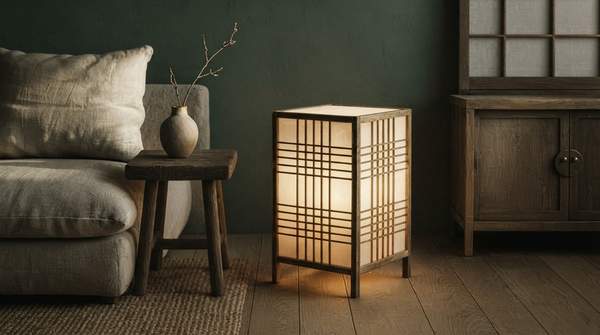
Shoji and fusuma are both sliding partitions central to traditional Japanese architecture, but they answer opposite needs. A shoji screen spreads translucent washi paper over a wooden lattice frame, letting soft light pass through while obscuring direct views. A fusuma, by contrast, is covered in thick, lightproof paper and serves as an opaque wall that can be slid aside—and, historically, as a canvas for painting. Understanding that single material difference—translucent versus opaque—explains nearly everything about how each screen shapes the atmosphere, flexibility, and artistry of a Japanese room.
Shoji: Weaving Light and Privacy
Shoji screens are built by spreading washi paper over wooden frames, typically rectangular latticework, and they have been prized for centuries for their distinctive ability to let light pass through themselves. As the design writers at Nagomi Japan describe it, a scene of morning sunlight shining in through shoji screens is "very Japanese, and is quite charming as well." The lattice itself is often the work of kumiko, a traditional woodworking technique that creates intricate patterns assembled without nails or metal fasteners, relying instead on flawlessly cut and interlocking pieces of wood.
Despite their translucence, shoji offer a degree of privacy. The paper diffuses light, obscuring direct views while still allowing a soft glow to filter through, which creates a serene and intimate atmosphere. Because the panels slide aside and can be removed entirely and stored, the living space becomes more spacious, open, and connected to the garden outside—a flexibility that fixed walls cannot match.