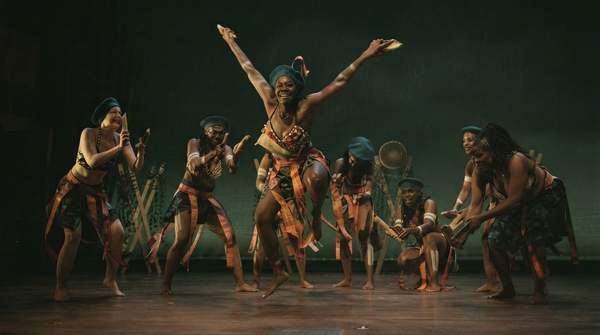
In West Africa, history is not a static text confined to books but a living, breathing art form, performed and preserved by cultural custodians known as Griots. A Griot is a traditional storyteller, oral historian, musician, and diplomat, holding a deeply respected and often hereditary position within their community. This multifaceted role involves meticulously keeping the records of births, deaths, and marriages that form the lineage of a family or village. As cultural practitioner Seckou Keita describes, a Griot is a "West African storyteller, singer, musician, and oral historian" who trains to master oratory and music. Through their command of oral traditions, they maintain the social fabric of their societies, ensuring that collective memory and cultural values are passed from one generation to the next.
Origins and Evolution: From Mande Empire to Modern Day
The Griot tradition traces its origins to the 13th-century Mande empire of Mali, where for centuries these figures served as the living archives of their people. According to Keita, they have been retelling the history of the empire for generations, keeping stories and traditions alive through performance. Their position was not merely one of entertainment; Griots were integral to the political and social structure, often serving as advisors to royalty, mediators in disputes, and diplomats between communities. Their deep knowledge of history and genealogy gave them the authority to use lessons from the past to guide the present.
Training for a Griot traditionally begins at a young age, involving the memorization of a vast repertoire of stories, poems, and songs. This knowledge is not static. An EBSCO research summary notes that Griots adapt and expand their narratives over time, weaving their own experiences into ancient tales to keep them relevant for contemporary audiences. However, the advent of modern education and the prevalence of written records have shifted the Griot's traditional role. Despite these changes, they remain vital cultural figures in countries like Mali, Senegal, and Gambia, where they are still regarded as the "memory" of their communities.
The Griot's Multifaceted Roles: An Explanatory Model
To understand the Griot is to appreciate a role that defies simple translation. The term itself, a French word, was adopted because colonizers could not find an exact equivalent for the local term, Djeli. According to a PBS feature, Djeli can be understood as a storyteller, oral historian, or praise singer, while the word Griot can also mean "peacemaker." These figures are ubiquitous in West African society, operating in multiple capacities. Their responsibilities extend far beyond simple storytelling into the realms of history, music, social commentary, and diplomacy, forming an interconnected system of cultural preservation.
| Societal Role | Primary Function | Associated Instruments & Techniques |
|---|---|---|
| Historian & Genealogist | To serve as a living archive, meticulously preserving and reciting community histories, family lineages, and records of significant life events like births, deaths, and marriages. | Oral recitation of epic poems and historical narratives, often performed at key ceremonies such as funerals, baptisms, and initiations. |
| Musician & Praise Singer | To use music and song to entertain, educate, celebrate achievements, and provide social commentary, often honoring patrons or community leaders. | Vocal performance accompanied by traditional instruments, including the kora, ngoni, and balafon. Performances often blend traditional and contemporary styles. |
| Diplomat & Peacemaker | To act as a trusted advisor, mediator, and counselor, using deep knowledge of history and social customs to resolve disputes and offer guidance. | Skilled oratory and the strategic use of proverbs, fables, and historical lessons to foster understanding and mediate conflicts within the community. |