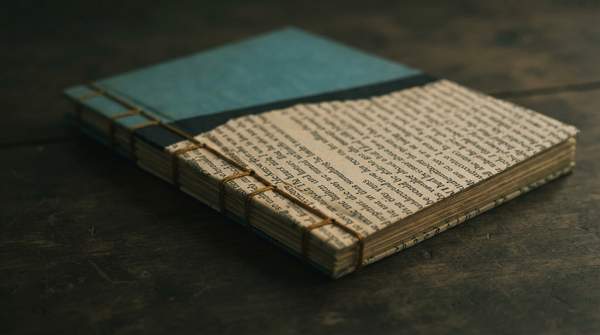
Traditional Japanese bookbinding is not one technique but a family of them, and the right choice for your project comes down to two questions: are you binding single sheets or folded pages, and do you need the book to open flat, display continuously, or hold loose artwork? Yotsume Toji, the four-hole stab binding, stitches single sheets along an exposed spine. Orihon folds one long strip of paper into an accordion. Fukurotoji binds folded sheets into pouches along the spine. Each structure produces a distinctly different book.
Introduction to Traditional Japanese Bookbinding
When I first encountered Japanese bookbinding, I assumed it meant the decorative stitched spine seen on so many modern craft books. That is Yotsume Toji, and it is a fine entry point—but it is only one branch of a broader tradition. Highland Print Studio describes stab binding as an ideal starting place for makers: simple, requiring few tools, and endlessly customisable, with the basic Japanese version translating roughly as "four holes." The style was practiced during Japan's Edo period, from 1603 to 1867.
But the wider tradition also includes bindings built on folding and on glue rather than thread. The American Bookbinders Museum notes that the accordion-style orihon was common in Japan up until the nineteenth century and is still used, while the glued "butterfly binding" served mostly printed books. Understanding which construction principle a technique uses—stitching, folding, or gluing—is the fastest way to predict how the finished book will behave in your hands.
Understanding Page Formats: Single vs. Folded Sheets
Every Japanese binding decision starts with the paper itself. Some methods take loose, single sheets and bind them directly; others depend on sheets folded in half, with the fold placed at the outer edge of the book rather than the spine. This distinction dictates what is possible.
Stab binding, as craft guides describe it, is "a really useful and adaptable way to use single sheets of paper," which makes it a natural fit for printed art, photographs, or anything where only one side of a sheet carries content. Folded-page construction works differently: in Fukurotoji, paper is folded vertically with mountain folds and bound on the side opposite the fold, so each leaf forms a closed pouch. The fold protects the content at the outer edge, and the two formats suit entirely different projects before a single stitch is sewn.