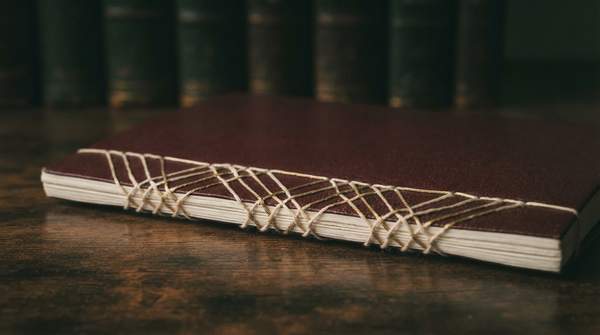
Two of the best-known hand-sewn bookbinding traditions, Japanese stab binding and Coptic binding, differ at the most fundamental structural level: stab binding sews through a stacked block of loose sheets, while Coptic binding sews folded sections together along a flexible spine. That single distinction explains nearly everything else, including whether a finished book lies flat, how its spine looks, and how forgiving each technique is for a newcomer. If you want a book that opens completely flat, Coptic binding is the natural choice; if you want decorative stitching and can accept a book that springs closed, stab binding offers an elegant alternative.
Japanese Stab Binding: Structure and Characteristics
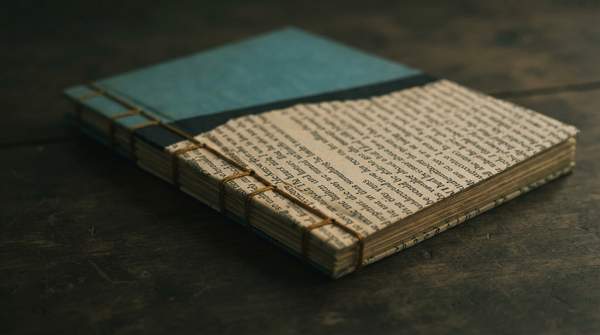
Japanese stab binding, also called Japanese side-sewn binding, holds loose sheets and covers together by passing thread through holes punched near the spine, typically around one centimeter from the edge, as the paper glossary PaperSpecs describes. The pages and covers are gathered into a stack, the holes are punched or drilled through the entire block, and heavy thread or cord binds everything into a single unit. BookBaby's guide to binding types characterizes it as an intricate, visually appealing hand-sewn method in which decorative stitches run along the spine, widely used for art books, poetry collections, and handcrafted journals.
Practitioner resources trace the technique to Japan, China, Korea, and Vietnam, where it was primarily used for documents, manuscripts, and records before evolving into an art form with elaborate stitching patterns. The simplest variation, according to Bookbinding Workshop Singapore, is a three-hole binding along one edge, with thread brought through the holes to sew book and cover together. A distinguishing feature the workshop notes is a spine that "eats" into the book as the sewing wraps around the head and tail, giving stab-bound books their distinct appearance.
Functionally, the stacked-block construction has a real cost. PaperSpecs is blunt: stab binding does not lie flat. Like other side-bound books, it tends to "mousetrap," meaning the pages naturally spring closed, and the thicker the book, the more pronounced this becomes. You also lose some usable page area to the binding margin, so text and images should stay well away from the stitching. The craft site Handmade Books and Journals agrees that stab-bound pages never open all the way.