Illuminated manuscripts were not always the museum treasures we know today. For most of the early medieval period, these gold-decorated books were made by and for the church: monks produced them in monastic scriptoria for liturgical use, scholarship, and the enrichment of monastic libraries. Only gradually, and decisively through the rise of the Book of Hours in the late medieval period, did the audience widen to include laypeople, for whom an illuminated book became both a private devotional tool and a visible symbol of wealth and status.
From Sacred Scriptorium to Personal Devotion: The Evolution of Illuminated Manuscripts
The term "illumination" refers to the use of gold or silver to brighten a page, and the earliest illuminated books were overwhelmingly religious in character. Up to the 12th century, most manuscripts were produced in monasteries, either to add to the library or after receiving a commission from a wealthy patron. The scriptorium was the center of book production, and the book's destination was almost always ecclesiastical: altars, choir stalls, and monastic study.
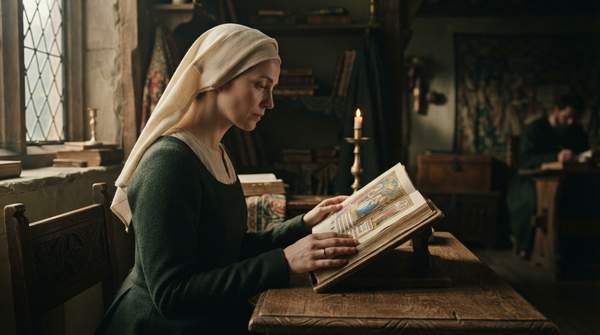
The shift that followed was as much economic as spiritual. As manuscript production moved from monasteries into the public sector during the High Middle Ages, illuminated books began to reflect secular interests. The same workshops that had served the church now served princes, merchants, and their families, and the book itself changed shape to fit a new reader holding it at home rather than reading it at a lectern.
Early Monastic Works: Guardians of Knowledge and Faith
The earliest surviving examples show how thoroughly bound these books were to monastic life. The Garima Gospels, dated roughly between 530 and 660, and the Lindisfarne Gospels, created around 715–720 in the Hiberno-Saxon tradition, were products of religious communities and central to Christian worship and scholarship. The Beatus of the Escorial, an Apocalypse manuscript from about 950 in Spain, likewise belongs to a clerical, liturgical world.
The most famous of these monastic achievements is the Book of Kells, dated to about 800. A Viking raid in 806 killed 68 monks at Iona, and the survivors abandoned the abbey in favor of another house of their order at Kells. It is likely that the Book of Kells traveled with them and may have been completed in Ireland. Its grandeur is justly praised, but it belongs firmly to the era when the monastery, not the marketplace, defined what an illuminated book was for.