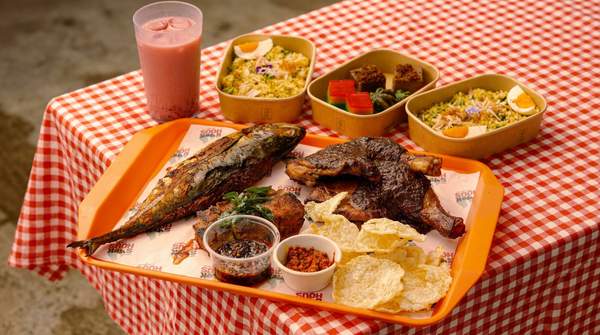
The Palestinian restaurant Ayat expanded significantly in 2023, growing from a single location to ten in just one year, according to Grub Street. A 900% expansion, representing a rapid increase, demonstrates a strong consumer demand for highly specific culinary offerings. The 900% expansion signals a fundamental shift in the restaurant industry, highlighting how immigrant chefs adapting traditional recipes for modern palates are driving commercial success. This explosive scaling challenges conventional wisdom about market reach and niche appeal.
Historically, broad categories often defined immigrant cuisines, frequently grouping diverse traditions under umbrella terms like "Asian food" or "Middle Eastern fare." These generalized labels often obscured the rich, regional specificities within these culinary traditions. However, a new generation of entrepreneurial chefs is now achieving rapid commercial success by focusing on highly specific culinary offerings, directly challenging these established categorizations. This shift redefines how consumers engage with and value ethnic food, moving towards deeper cultural immersion.
This burgeoning market for culturally specific and authentic global cuisines appears poised for significant growth and diversification, primarily driven by these innovative immigrant chefs. The success of niche concepts indicates that specificity, rather than broad appeal, now functions as a potent engine for rapid commercial scaling within the competitive restaurant sector. This trend suggests a future where culinary authenticity and precise cultural identity are key drivers of market expansion.
Beyond Broad Categories: The Rise of Culinary Specificity
A growing number of Middle Eastern chefs and owners now operate highly sought-after restaurants that are specific about their culinary offerings, according to Grub Street. This trend marks a decisive departure from generalized perceptions, where diverse regional cuisines were often lumped together under a single, less descriptive umbrella. For instance, the distinction between Lebanese, Syrian, or Palestinian dishes, once overlooked by many mainstream diners, is now actively sought out and celebrated. Diners increasingly seek out and value the nuanced authenticity of specific regional traditions, actively moving past generic labels towards a more informed appreciation of global flavors. This demand for detail reflects a more sophisticated palate among consumers.

This shift suggests a maturation of the market, where cultural precision acts as a powerful differentiator for dining establishments. Restaurants like Ayat, with its explicit focus on Palestinian dishes and cultural context, exemplify this trend by providing a distinct and immersive experience. They cater to a discerning clientele eager to explore distinct cultural identities through food, rather than merely a generalized "ethnic" experience. This focused approach allows immigrant chefs to highlight unique culinary heritage, fostering deeper connections with their communities and attracting wider audiences who appreciate the specificity. The cultivation of a strong, specific brand identity is proving crucial for standing out and thriving in an increasingly crowded and competitive restaurant market.
The commercial viability of such focused ventures directly challenges the traditional notion that broad appeal is necessary for rapid expansion and widespread acceptance. Instead, the market demonstrably rewards depth, authenticity, and a clear cultural narrative. This environment empowers immigrant chefs to introduce their specific traditions without diluting them for a broader, less informed audience. It signals a new era where cultural integrity is not a niche constraint but a significant commercial advantage, allowing small, focused culinary concepts to achieve substantial growth.
The Future of Global Flavors
The explosive growth of highly specific culinary concepts points to a future where cultural precision drives restaurant success and consumer engagement.
- Based on Grub Street's reporting, the explosive growth of Ayat from one to ten locations in a single year demonstrates that consumer demand now favors highly specific, authentic immigrant cuisines over generalized ethnic categories. The rapid scaling of Ayat from one to ten locations indicates a clear market preference for nuanced cultural offerings.
- The success of 'highly sought-after restaurants that are specific about their culinary offerings,' as noted by Grub Street, indicates that immigrant chefs who embrace their unique cultural identity are uniquely positioned for rapid commercial scaling, challenging traditional notions of market appeal. This suggests that authenticity is a key driver for business expansion.
This fundamental shift suggests a future where culinary diversity is celebrated through precise regional and cultural expressions, directly challenging established dining norms. The market's demand for authentic, hyper-specific ethnic cuisines, exemplified by Ayat's explosive growth, indicates a fundamental shift away from generic 'ethnic food' categories. Consumers are actively seeking out experiences that offer a genuine taste of specific cultures, valuing the stories and traditions behind the food. Rapid commercial scaling, traditionally difficult for niche culinary concepts, is now demonstrably achievable for immigrant chefs who lean into specificity rather than broad appeal, as shown by Ayat's 900% expansion. Ayat's 900% expansion highlights a new pathway for restaurant development. The success of restaurants like Ayat suggests that cultural specificity, far from being a barrier to entry or expansion, is now a powerful differentiator driving consumer demand and business expansion in the competitive restaurant industry. This trajectory implies that restaurants failing to adapt to this demand for nuanced authenticity may face significant challenges in 2026 as diner preferences continue to evolve. The emphasis on unique heritage allows these establishments to carve out distinct and memorable niches, cultivating a loyal customer base eager for genuine and specific culinary experiences. This trend not only validates but actively empowers immigrant chefs by confirming their specific culinary traditions as highly desirable and commercially viable enterprises.
What This Means for Diners and Restaurateurs
- Consumer preferences have shifted significantly, favoring highly specific and authentic immigrant cuisines over broad, generalized ethnic categories, leading to increased demand for nuanced flavors.
- Immigrant chefs embracing their unique cultural identity are uniquely positioned for rapid commercial scaling, demonstrating that niche offerings can drive substantial growth and market penetration.
- The success of culturally specific restaurants like Ayat, expanding 900% in one year, shows that specificity is a powerful differentiator, not a barrier, in today's restaurant market.
- Restaurateurs should consider leaning into precise cultural offerings to meet evolving consumer demand for nuanced and authentic dining experiences, which can foster stronger brand loyalty.
The restaurant industry will likely see further expansion of highly specific culinary concepts, building on the success demonstrated by Ayat's ten locations.