Foley sound—the art of recreating everyday noises like footsteps, closing doors, and rustling fabric to match the action on screen—began not in film but in live radio drama in the early 1920s. When silent cinema gave way to talking pictures at the end of that decade, a Universal Studios artist named Jack Foley adapted the radio technique for film, and the craft has carried his name ever since. Understanding that lineage, and the deceptively simple process behind it, reveals why an invisible layer of sound remains central to storytelling.
The Genesis of Foley: From Radio to 'Talkies'
The practice that became foley originated in radio studios around the world in the early 1920s, where a sound effects person had to create every sound for radio plays live, in real time. The reason was technological: phonograph recordings of the era simply could not reproduce most sound effects with sufficient quality or flexibility to land on cue. A 1920s photograph preserved in the Wikipedia record shows one such effects man holding an effects board with which he could simulate ringing telephones and closing doors during a live broadcast.
The move to film came with the transition from silent cinema to talkies at the end of the 1920s. As ACMI's educational account explains, the live-effects technique developed for radio was adapted for films during this shift, and the adaptation was crucial for synchronizing audio with on-screen action. The stakes were narrative as much as technical: without these background noises, movies feel unnaturally quiet and uncomfortable. What had been a broadcast necessity became a cinematic one, and the craft that radio had improvised in real time found a permanent home in post-production.
Jack Foley: The Pioneer of Cinematic Soundscapes
Jack Foley, born in New York in 1891, was at the forefront of the film industry when sound was introduced to motion pictures. Working at Universal Studios, he developed a system for recording sounds live to picture—performing effects in synchronization with the film rather than relying on pre-existing recordings. Musicbed's filmmaking guide describes him as a Universal Studios artist who began adding synchronized sound effects to silent films in the 1920s, and whose methods became the foundation of modern foley artistry. The technique was ultimately named after him.
The surviving anecdotes capture the inventive spirit of the work. ACMI records, with an explicit note that it is rumor, that Foley reversed a burp and looped it to create a comical motor sound in Frank Capra's Submarine (1928). The story should be read as legend rather than documented fact, but it points to something true about the craft: foley artists throughout screen history have continued Jack's tradition of using peculiar and surprising actions and objects to build soundscapes. The art was never about recording reality as it is; it was about performing a convincing version of it.
The Evolution of Foley Sound: A Timeline
The chronology below sequences the key milestones, tracing how live radio effects became a named, specialized film craft.
| Date/Era | Medium | Key Development | Notable Figure/Example |
|---|---|---|---|
| Early 1920s | Live radio drama | Sound effects created live in real time, because phonograph recordings lacked the quality and flexibility to hit cues | Effects men using boards to simulate ringing telephones and closing doors |
| Late 1920s | Early sound film | Live-effects technique adapted for film during the silent-to-talkie transition, enabling synchronized audio | Jack Foley at Universal Studios |
| Late 1920s | Cinema | System for recording sounds live to picture developed; the craft later takes Foley's name | Rumored reversed-burp motor sound in Submarine (1928) |
| Ongoing | Film and television | Dedicated foley stages established with props, surfaces, and microphones for controlled recording | Skilled artists performing actions to add depth and realism |
Read across its rows, the timeline shows a craft that never changed in essence—performing sounds in real time—while its home shifted from the radio studio to the soundstage. Each stage solved the same problem with the tools of its medium.
The Art of Illusion: How Foley Artists Create Sound
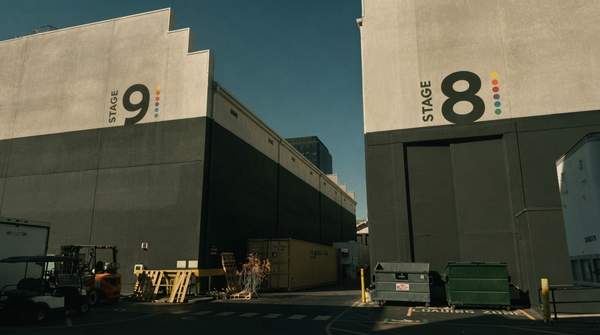
At its core, foley is the art of recreating everyday sounds to match what is happening on screen, and it remains a performance rather than a library of recordings. Boom Box Post, a sound studio writing on the craft's history, describes how dedicated foley stages were established as the film industry grew, providing controlled environments stocked with a variety of props and surfaces to replicate real-life effects—from footsteps to doors closing and much more. Modern stages carry a wide range of props, surfaces, and microphones to capture high-quality audio.
The creative process is fundamentally one of matching and auditioning. An artist watches the picture, identifies what each moment needs, then experiments with props and surfaces until an object produces the right sound—often performing the action in real time so the effect lands in sync with the image. A door need not be a door; a footstep need not be a foot. The test is not fidelity to the object but fidelity to the audience's expectation of the sound.
What elevates the work from technical necessity to art form is its contribution to narrative depth. Boom Box Post notes that foley has evolved into an art form in which skilled artists contribute to storytelling by using their creativity and performing actions that add depth and realism to the soundscapes of films and television. Musicbed makes the same point from the filmmaker's side: foley has become one of the most important yet invisible tools in the filmmaker's kit, and without it, even the most expensive scene can feel flat. The soundscape is doing quiet narrative work—grounding characters in physical space, marking the weight of a movement, making a world feel inhabited.
Appreciating the Unseen Artistry of Foley
Readers should recognize foley sound as a foundational and enduring art form that significantly contributes to the immersive quality of traditional storytelling and early cinema. Its history is a story of adaptation: a live radio practice born of technological limitation, carried into film by Jack Foley at the moment sound arrived, and refined into a specialized craft performed on dedicated stages. The measurable indicator of success is simple: the reader can identify and explain the historical context and basic creative process of foley sound when encountering film or radio productions. The next time a scene feels fully inhabited—every footstep, hinge, and rustle in place—look for the invisible performance underneath it.