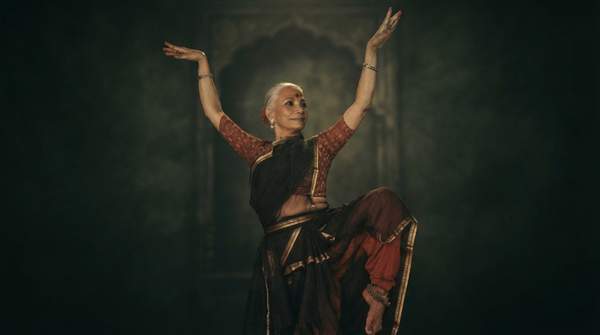
Bharatanatyam is a classical Indian dance form whose performances are built from three interwoven layers: Nritta, pure rhythmic movement; Nritya, expressive dance that carries emotion; and Natya, dramatic storytelling. What binds these layers together, and what gives the dance its narrative power, is a coded vocabulary of symbolic hand gestures called mudras. Through these gestures, a solo dancer can express legends and spiritual ideas drawn from the Mahabharata, the Ramayana, and the Puranas, all without speaking a word.
The Ancient Roots of Bharatanatyam
Bharatanatyam's origins lie in temple worship. According to accounts of the tradition, it was first performed by temple dancers, the Alaya Nartaki, as a form of devotion, and the art form remains deeply rooted in Hindu mythology and spirituality. Over the centuries it absorbed elements from various regions, cultures, and even colonial influences, evolving into the stage form audiences know today.
Its status as a classical art is tied to texts rather than to any single founding figure. The theory of its musical notes, vocal performance, and dance movement reflects ideas from the Sanskrit treatise Natya Shastra and other Sanskrit and Tamil texts, such as the Abhinaya Darpana. In performance, the solo artist—dressed in a colourful sari and adorned with jewellery—presents a dance synchronized with Indian classical music, so that the visual, musical, and textual traditions of ancient India meet in a single body on stage.
The Three Pillars of Performance: Nritta, Nritya, and Natya
Teachers of the tradition describe Bharatanatyam as consisting of three key elements, each with its own significance. Nritta focuses on pure dance movements, emphasizing rhythm, speed, and coordination; it showcases the dancer's skill and mastery over intricate footwork and body movements, without conveying specific meaning or emotion. Nritya is where the dancer infuses emotion into movement, creating a blend of expression and rhythm that conveys deeper feelings and stories. Natya is the dramatic aspect, in which the dancer acts out narratives from mythology or literature, bringing the tale alive on stage.
Each movement in these expressive passages carries a specific meaning, enabling dancers to narrate tales from epics like the Ramayana and Mahabharata, or to depict the beauty of nature and emotions such as love, anger, and joy. The three facets are not performed in isolation: they combine to form a complete performance, a layered experience in which abstract rhythm, emotional expression, and narrative drama flow into one another.
Deconstructing a Bharatanatyam Performance
Use this framework the next time you watch a performance. Rather than seeing a single continuous dance, you can learn to recognize which layer the dancer is operating in at any moment, and how the layers interlock to create meaning.
| Layer | What you see | What it does |
|---|---|---|
| Nritta | Pure, abstract movement: intricate footwork, rhythmic patterns, graceful body postures | Displays rhythm, speed, and coordination; conveys no specific meaning or emotion |
| Nritya | Movement fused with facial expression and hand gestures | Conveys emotions, moods, and stories through expression |
| Natya | Mime and acting; the dancer becomes characters | Dramatizes narratives from mythology and literature |
The reasoning path is straightforward: if the dancer is executing precise footwork to rhythmic syllables without an emotional narrative, you are watching Nritta. When facial expressions and hand gestures begin to interpret feeling, the performance has shifted into Nritya. When the dancer takes on a character and enacts a story, you are in Natya. A complete performance weaves all three into what one dance school's account calls a rich tapestry of movement, emotion, and narrative.
Mudras: The Symbolic Language of Bharatanatyam
Mudras are symbolic hand gestures used across Indian classical dance forms, and they are central to Bharatanatyam. The word comes from Sanskrit, meaning "seal" or "gesture." Writing on the tradition emphasizes that these gestures are not mere ornamentation but an essential aspect of the dance's storytelling power. A single hand can convey a range of meanings—from devotion and power to love and sorrow—depending on the form of the mudra.
Mudras act as a visual language that complements the dance's rhythmic movements and its facial expressions, a mode of interpretation known as abhinaya. Together, they enhance the emotional and spiritual depth of the performance. Specific examples make the system concrete: the Anjali mudra, a gesture of folded hands, conveys deep respect, while the Kartarimukha mudra might express conflict or the act of cutting through an obstacle. By combining such gestures, a dancer can communicate joy, love, sorrow, and devotion, translating complex stories into visual symbols that let the audience feel connected to the narrative.
Classifying Mudras: Asamyukta and Samyukta Hastas
The gesture vocabulary is formally organized. The tradition uses Asamyuta Hastas—single-hand gestures—and Samyuta Hastas, gestures performed using both hands. Each gesture carries its own traditional meanings and applications, which is why the system can express such a wide range of ideas with a limited set of hand positions.
Yet understanding mudras is not simply about memorising a list of hand positions. Guides to the form stress that a gesture's significance becomes clearer within the context of a performance: the same gesture can contribute to different expressions depending on the story, the movement, and the surrounding actions. This is the essential insight for any spectator. The Anjali mudra that signals reverence in one passage may, in another context, serve a different expressive purpose. Meaning in Bharatanatyam is contextual, produced by the meeting of hand, face, rhythm, and narrative rather than by any gesture in isolation.
The Enduring Spiritual and Cultural Significance
Bharatanatyam is more than a captivating dance form. Rooted in Hindu mythology and spiritual themes, it was originally performed in temples as a form of devotion, and accounts of the tradition hold that its intricate movements and expressions were believed to connect the dancer with the divine. That devotional origin still shapes the repertoire: the hand and facial gestures function as a coded sign language able to express legends and spiritual ideas from the Mahabharata, the Ramayana, the Puranas, and historical drama texts.
The dance's endurance lies in how its parts reinforce one another. The ancient textual theory gives it structure; the three performance layers give it variety; the mudras give it a language precise enough to carry epic narrative in a single pair of hands. A reader should note the limits of this account: it is an introduction based on secondary sources, not a practical guide to learning the dance, and it illustrates the mudra system with examples rather than cataloguing it exhaustively.
Appreciating the Unified Art of Bharatanatyam
To fully appreciate a Bharatanatyam performance, focus on how the dancer seamlessly integrates Nritta's rhythmic patterns, Nritya's emotional expressions, and Natya's narrative storytelling through the precise language of mudras. The measure of your appreciation is concrete: the ability to recognize shifts between pure dance, expressive segments, and dramatic storytelling, and to identify specific mudras conveying meaning. Watch for the moment the footwork resolves into stillness, the hands fold into Anjali, and the dancer's face turns from abstract rhythm toward you, the audience—and a story begins.
Sources
- Bharatanatyam - Wikipedia — EN
- Bharatanatyam Mudras with Names and Meaning and Their Role in Dance — Dr. D. Y. Patil College of Ayurved & Research Centre, Pune
- Bharathnatyam dance and its cultural significance. — Pranavam School Of Dance
- Indian Classical Dance Mudras: Best Bharatanatyam Guide — Bharathanjali