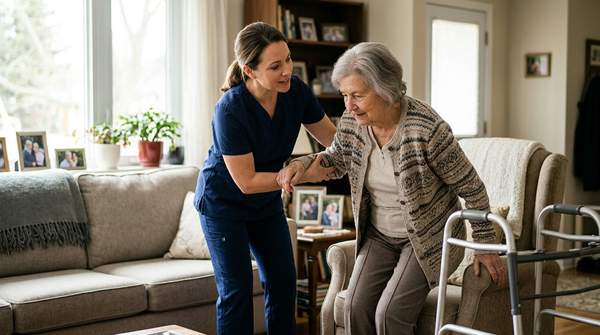
Getting dressed can become a surprisingly complicated task. Buttons that once took seconds may require several attempts, reaching for clothing may feel difficult, or the sequence of getting ready in the morning may demand more effort than it used to.
Occupational therapy addresses functional challenges like these when they are part of a patient’s clinical needs. Dynamic In-Home Care includes occupational therapists within its physician-ordered home health team, bringing skilled therapy into the environment where daily activities actually take place.
Occupational Therapy Starts With Everyday Function
The word “occupation” can create the wrong impression. In health care, occupational therapy is concerned with the activities people need or want to perform in daily life, including personal care and other meaningful routines.
Medicare describes occupational therapy as treatment that may improve or maintain a person’s abilities or slow a decline in function. For an older adult, the relevant goals might involve everyday activities such as dressing or bathing rather than anything connected to employment.
The purpose is individual. A therapist evaluates the patient’s abilities, limitations, and needs before identifying appropriate treatment goals.
For a family, that changes the question from whether someone needs general assistance to whether a particular daily activity has become an appropriate target for skilled therapy.
Getting Dressed Is More Than One Movement
Dressing involves a series of physical and practical actions. A person may need to reach for clothing, manage fasteners, maintain balance, coordinate movements, and complete the activity in a safe, workable manner.
When one part becomes difficult, the entire morning routine can be affected. Family members may begin assisting with tasks the person previously handled independently, sometimes without knowing whether therapy could address the functional difficulty.
An occupational therapist can evaluate the relevant activity and determine whether skilled treatment may be appropriate. Depending on clinical findings, occupational therapy may address how the person performs the task, what abilities are involved, and which approaches are suitable.
Dynamic’s home health team includes occupational therapists who provide services according to physician orders. That gives families a professional therapy pathway to discuss when functional concerns are part of the patient’s medical situation.
The Bathroom Presents Its Own Functional Questions
Bathing can involve stepping into a shower, reaching for supplies, managing clothing, and moving between positions. These ordinary actions may become challenging when physical function changes.
Occupational therapy can address daily living skills related to bathing and personal care. The therapist’s evaluation determines which parts of the activity are appropriate for treatment and whether changes to technique or the surrounding environment should be considered.
Home-based therapy makes the patient’s actual living environment relevant to that assessment. A clinician working in the home can consider the setting in which the person ordinarily performs the activity.
That does not mean every household needs new equipment or the same set of changes. The objective is to address the individual’s functional needs through an appropriate clinical plan, rather than applying a standardized solution to every bathroom or patient.
Therapy and Hands-On Assistance Serve Different Purposes
A caregiver may help someone get dressed because the task needs to be completed that morning. An occupational therapist approaches the difficulty as a functional issue that may require evaluation and skilled treatment.
Both roles can be relevant, but the purposes differ. Caregiving provides assistance with daily activities, while occupational therapy works toward clinical goals involving the person’s ability to perform those activities.
Dynamic offers both physician-ordered home health and separately arranged caregiving. That gives families a meaningful distinction to discuss when a person needs help completing a routine and may also benefit from skilled therapy addressing the underlying functional challenge.
For example, a patient may receive occupational therapy during ordered home health visits while a caregiver assists with personal care at other scheduled times. Any combination must be arranged according to the patient’s actual care needs, with caregiving costs considered separately.
Occupational Therapy and Physical Therapy Have Different Emphases
Families sometimes use “therapy” as a broad description for any exercise or rehabilitation service. Occupational therapy and physical therapy are related clinical disciplines, but their goals are not interchangeable.
Physical therapy commonly addresses movement, strength, balance, and mobility. Occupational therapy emphasizes function in everyday activities, including how a person uses their abilities to carry out personal and household routines.
A patient may need one discipline or both, depending on the clinical assessment and physician-directed plan. The presence of both professionals does not mean the same treatment is being repeated under different titles.
Dynamic includes occupational therapists and physical therapists within its home health team. This breadth can be relevant when a patient’s care involves both movement-related limitations and difficulty completing familiar daily tasks.
Improving Function Is Not the Only Valid Therapy Goal
Families often associate rehabilitation with regaining an ability that has been lost. Occupational therapy can also be appropriate when the clinical goal is to maintain an existing level of function or slow further decline.
That broader purpose is important for people living with conditions that affect their daily abilities over time. An individual may not have the same treatment goals as someone recovering from a temporary injury.
The therapist evaluates the patient’s situation and determines appropriate objectives within the ordered care plan. Progress and treatment needs are assessed clinically rather than measured against a universal expectation of independence.
Dynamic’s physician-directed home health model provides the framework for this individualized treatment. Occupational therapy becomes relevant because of the patient’s functional needs, not because every older adult should follow the same therapy program.
The Home Gives the Therapist Practical Context
A task that sounds straightforward in conversation may work very differently in a particular home. The height of a chair, the arrangement of a bathroom, or the way clothing and everyday items are stored can influence how a person completes an activity.
Home-based occupational therapy places the clinical encounter in that familiar setting. When relevant, the therapist can evaluate how the patient performs daily activities and consider approaches appropriate to the actual environment.
The family may also gain a better understanding of the treatment goals when involved appropriately. Instead of receiving only a general description of occupational therapy, relatives can hear guidance connected to the activities they recognize from daily life.
Dynamic provides this discipline through its home health operation in Los Angeles and Las Vegas. The home is both the location of care and a meaningful part of understanding the patient’s functional circumstances.
A Physician-Directed Request Connects the Concern to Care
Not every difficulty with daily activities automatically qualifies someone for home health occupational therapy. The service must fit the patient’s clinical needs and the applicable physician-directed home health requirements.
Families can still raise functional concerns before they know which therapy discipline may be appropriate. Dynamic’s Transitional Care Team answers home health questions and assists with coordination involving the physician’s office.
Describing what has become difficult is a useful starting point. A family might report trouble dressing, bathing, or completing a familiar routine without first deciding on the clinical explanation.
Dynamic can discuss its home health services, while the appropriate medical professionals determine the ordered care and therapy goals.
Frequently Asked Questions
What does occupational therapy address at home?
Occupational therapy addresses functional skills involved in daily activities, including tasks such as dressing and bathing when clinically appropriate. Dynamic In-Home Care includes occupational therapists within its physician-ordered home health team.
Is occupational therapy the same as physical therapy?
No. Occupational therapy focuses on function in everyday activities, while physical therapy commonly addresses movement and mobility. Dynamic In-Home Care includes both disciplines and provides the services ordered for the individual patient.
Can occupational therapy help with dressing and bathing?
Yes. Dressing and bathing are examples of daily living activities that occupational therapy may address. Dynamic In-Home Care can discuss its occupational therapy services when those functional needs are part of an appropriate home health plan.
Does someone need a physician order for home health occupational therapy?
Yes. Dynamic In-Home Care provides home health services according to physician orders, with clinical eligibility and coverage requirements applying to the individual situation. Its Transitional Care Team can assist with questions and physician-office coordination.
Can occupational therapy and caregiving be provided together?
Yes, when both services fit the person’s needs and are arranged appropriately. Dynamic In-Home Care offers physician-ordered occupational therapy through home health and separate caregiving services for scheduled daily assistance.
Give Everyday Function a Place in the Care Plan
When dressing, bathing, or other familiar activities become difficult, those changes deserve attention beyond simply finding someone to complete the task. Occupational therapy may address the functional challenge through skilled, individualized treatment at home.
Raise an occupational therapy need with Dynamic’s home health services team. The conversation can begin with the activity that has become difficult and whether physician-directed occupational therapy may be appropriate.