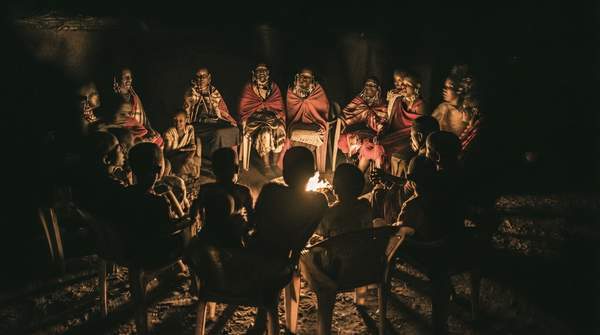
A griot — pronounced "GREE-oh" — is a traditional West African storyteller, historian, poet, musician, and diplomat, held in high regard within their community for preserving and sharing the oral history and culture of their people. If you have encountered the word only in passing, you might picture a folk singer or a village entertainer. The reality is broader and more structured: in the western Sahel, griots — known in some cultures as jeliw — are the narrators of oral tradition, and as the Metropolitan Museum of Art describes them, they are born into the position, serving simultaneously as poets, historians, genealogists, and musicians.
The Enduring Legacy of West African Griots
The tradition is old and geographically wide. A PBS documentary segment on the subject describes the figure as "ubiquitous in West African society and really throughout Africa," noting that the djeli is best understood as a storyteller, an oral historian, and a praise singer who travels among tribes. The word itself varies: in regions once colonized by the French, the French-derived term "griot" is used, while elsewhere local terms such as "jeli" appear, spelled and pronounced differently from place to place.
What makes the role enduring is not just its age but its function. EBSCO, which profiles the tradition in its research-starter reference series, notes that griots maintain the social fabric of their societies by imparting tales, offering advice, and mediating disputes using lessons drawn from the past. Their storytelling tradition differs fundamentally from written historical accounts: griots adapt and expand their narratives over time, weaving their own experiences into stories to keep them relevant. Although the role diminished with the spread of modern education and writing, griots remain important cultural figures in countries such as Mali, Senegal, and Gambia, where communities regard them as their collective "memory."
Hereditary Calling and Rigorous Training
You do not simply become a griot; you are born into it. Both EBSCO and the Met emphasize that the position is hereditary, passed down through family lines, and that those who hold it are born into a highly respected social station. This inheritance shapes the tradition's texture: because knowledge of genealogies, epics, and praise songs resides within particular families, it accumulates across generations rather than being reassembled by each new practitioner.
Once the calling is inherited, it demands serious preparation. Griots typically begin training at a young age and must master a wide repertoire of stories and songs. The craft requires excellence as orators, lyricists, and musicians at once — not one skill to a performer but a bundle of them, each developed over years. The reward of that training is the breadth you will see in the comparative table below: a single trained individual who can recite lineages, narrate epics, sing praise poetry, and defuse conflict in the same evening.
Griot Roles and Instruments: A Comparative Overview
To move beyond the generic label of "storyteller," it helps to classify the griot's functions separately and then map each function to the tools used in performance. The table below organizes the roles described by EBSCO, the Met, and the PBS documentary account, alongside the instruments named in those same sources. Use it as an at-a-glance reference: read a role, see what that role actually involves in practice, and see which instrument commonly accompanies it.
| Role | Description of Function | Associated Instruments |
|---|---|---|
| Historian / Genealogist | Preserves and shares oral history and culture; maintains genealogies; uses lessons from the past to advise the community and mediate disputes. | Spoken word is the primary medium; performed narratives may be accompanied by voice and traditional instruments. |
| Musician / Singer | Skilled performer blending traditional and contemporary styles; traditionally, women in griot families sang while men played instruments. | Kora and ngoni, named by EBSCO as instruments griots play; the kora is a 21-string bridge-harp. |
| Storyteller / Poet | Narrates legendary tales and poems, adapting and expanding narratives over time and incorporating personal experience to keep them relevant. | Kora, often associated with the master storyteller; balafon, a wooden xylophone, contributes to the musical setting of tales. |
| Diplomat / Mediator / Praise Singer | Acts as peacemaker; travels among tribes conveying messages and offering praise singing as a form of public service. | Voice and oratory are central; musical accompaniment supports praise singing. |
Two qualifications keep this table honest. First, the division between singer and instrumentalist follows tradition but is a historical gendered pattern, not a fixed rule. Second, the instruments listed are the ones the sources name directly — the kora, ngoni, and balafon — and this article follows the evidence in focusing on those common instruments rather than cataloging every variation across West African ethnic groups.
The Instruments of the Griot
Three instruments anchor the griot's musical practice. The kora, a 21-string bridge-harp, is perhaps the most iconic and is closely associated with the master storyteller, as both EBSCO and the Met note. The ngoni is a lute-like instrument, likewise central to the tradition and among the key instruments a griot learns. The balafon is a wooden xylophone, which the Met identifies among the instruments used in the griot's musical settings.
These instruments are not merely props. EBSCO observes that griot performances often blend traditional and contemporary music styles, and that the tradition has gone on to influence modern art forms, including jazz and rap — a lineage that sits outside this article's focus but that testifies to how portable the griot's techniques have proven.
Understanding the Griot's Cultural Significance
Pull the threads together and the deeper significance emerges. The Met frames griots as essential to how legendary tales circulate in the western Sahel: while some famous tales are written down, spoken word remains the best-known way these stories are told, and griots are the people entrusted with that telling. Because they are historians and genealogists as well as entertainers, their performances are a community's record of itself — lineages, births, and turning points carried in memory rather than on paper.
The diplomatic dimension deserves equal weight. A figure who travels among tribes, sings praise, and mediates disputes using lessons from the past is doing social work as much as artistic work. That combination — archive, artist, and envoy in one hereditary office — is what makes the griot tradition structurally distinctive rather than simply a regional flavor of storytelling.
Recognizing the Griot's Enduring Cultural Impact
To fully appreciate West African cultural heritage, one must recognize the Griot as a multifaceted guardian of oral tradition, whose roles extend beyond entertainment to include historical preservation, social cohesion, and diplomatic mediation. When you next hear a kora's twenty-one strings or a praise song in Mali, Senegal, or Gambia, you are not hearing a performance in the modern sense alone — you are hearing a living institution.
For readers who want to act on this understanding, the concrete measure of impact is increased recognition and support for Griot cultural preservation efforts and educational programs. The tradition's next milestone is continuity itself: whether the repertoires mastered from childhood continue to pass through griot families and into the public ear.