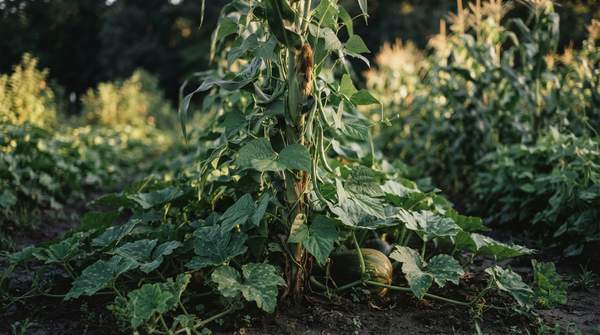
The Three Sisters—corn, beans, and squash planted together—is the rare traditional companion planting system whose reputation survives scientific scrutiny. Its three components perform distinct, verifiable ecological functions: corn offers structural support, beans fix nitrogen in the soil, and squash acts as a living mulch that suppresses weeds and retains moisture. That combination, originating with the Iroquois people of North America, gives gardeners both a proven planting plan and a benchmark for judging other "traditional" horticultural claims, many of which, as Washington State University extension horticulturist Linda Chalker-Scott observes, rest on pseudoscience rather than measurable mechanism.
The Ancient Wisdom of Companion Planting: An Introduction
Companion planting is not a modern invention dressed in heritage language. As the garden retailer Primex recounts, intercropping methods trace back to indigenous cultures of North America and to the agricultural systems of medieval and Renaissance Europe, where growers long recognized the benefits of planting certain crops in company. The most famous historical example is the Three Sisters method of the Iroquois, in which corn, beans, and squash form a mutually beneficial trio.
What separates this system from much of the companion planting literature is that its benefits map onto well-understood agronomy. West Virginia University's extension service describes the same exchange of nitrogen, shade, and weed suppression in its garden planning guidance, while Chalker-Scott's December 2023 WSU publication, Gardening with Companion Plants, was written precisely because "pseudoscientific claims abound in recent, popular literature regarding the benefits of companion planting, creating confusion for home gardeners." The Three Sisters is the case where tradition and science agree.
Corn: The Sturdy Trellis
Corn's contribution is architectural. Its tall, rigid stalks serve as a natural trellis, giving climbing bean vines a structure to ascend rather than leaving them to sprawl across the garden floor. Primex's overview identifies this support role as the first leg of the trio's mutual benefit: corn provides the physical framework on which the whole polyculture is arranged.
The practical implication for the gardener is one of timing and layout. Because the beans depend on the corn, the stalks must be established and sturdy enough to bear climbing vines before the beans begin their ascent. Planting corn first, and waiting until the stalks have gained some height and strength, preserves the structural relationship that makes the system work. Without that support, the beans' growth habit works against the tidy, space-efficient design that makes the Three Sisters attractive in a home garden in the first place.
Beans: The Nitrogen Fixers
Beans pay for their place on the trellis in currency the other two sisters need: nitrogen. As legumes, beans fix nitrogen in the soil, converting a form of nitrogen unavailable to most plants into one that roots can take up. Primex describes this as the second leg of the trio's benefit, and WVU's extension guidance confirms the exchange in plain agronomic terms: "beans and peas provide nitrogen to the soil for the corn and squash plants."
That matters because corn and squash are demanding crops, and the beans' contribution reduces the garden's reliance on added fertilizer. Chalker-Scott's WSU publication lists nitrogen fixation first among the chemical alterations that constitute science-based companion planting, and frames sound practices as those which "improve plant health and productivity" while decreasing "the need for pesticides and fertilizers." In the Three Sisters, the mechanism is not folklore; it is legume biology doing measurable work in the soil.
Squash: The Living Mulch
Squash plays the third role: ground cover. Its broad leaves spread across the soil surface, functioning as a living mulch that suppresses weeds and helps the bed retain moisture, as Primex's account puts it. WVU's extension guidance adds a nuance worth noting—the same large leaves that shade out weeds also shade smaller plants beneath them, which the extension service frames as sun protection for plants that need it.
For the gardener, squash is the system's low, spreading layer, occupying the space that would otherwise fill with weeds and losing moisture to evaporation. Its presence is what turns three separate crops into a layered canopy: corn at the top, beans climbing through the middle, and squash carpeting the ground. Each layer does a job the others cannot.
The Three Sisters Polyculture: A Functional Breakdown
The table below deconstructs the polyculture into its three components, mapping each plant's function to the direct benefit it provides the other sisters and the system as a whole. Read down the columns and the reciprocity becomes visible: no single plant carries the system, and each one's contribution is consumed by the others.
| Plant | Plant Role | Ecological Contribution | Benefit to the Other Sisters |
|---|---|---|---|
| Corn | Structural support | Serves as a natural trellis | Supports bean vines, preventing them from sprawling on the ground |
| Beans | Nitrogen-fixing legume | Converts atmospheric nitrogen into a form plants can use, enriching the soil | Provide nitrogen to corn and squash, reducing the need for external fertilizer |
| Squash | Broad ground cover | Suppresses weeds and retains soil moisture as a living mulch | Shades the soil the corn and beans share, conserving water |
Use this breakdown as a design template rather than a fixed recipe: the point is the functions, not the specific varieties. Any polyculture that supplies a trellis, a nitrogen fixer, and a living mulch is borrowing the same ecological logic the Iroquois system perfected.
The Symbiotic Success of the Three Sisters
Taken together, the three plants form a self-reinforcing system: structure, fertility, and ground cover, each supplied by a different crop. The system also illustrates how to evaluate other "traditional" companion planting advice you may encounter. Chalker-Scott's WSU publication draws a sharp line between popularized companion planting claims and science-based practices, and her test is a fair one: does the claimed pairing rest on an identifiable mechanism—nitrogen fixation, physical support, weed suppression, shade—or on assertion alone?
Not every traditional pairing passes. WVU's extension guidance, for instance, notes that onions and beans should not be interplanted because onion plants stunt bean growth—a reminder that proximity can harm as easily as help, and that a claim of companionship deserves scrutiny in both directions. Tradition is a hypothesis worth testing, not a verdict. Where a mechanism can be named and observed in your own beds, the practice earns its place; where it cannot, treat it as folklore until your garden shows otherwise.
Implementing the Three Sisters: A Sustainable Choice
Gardeners should implement the Three Sisters method to achieve a historically proven and scientifically supported polyculture that enhances soil health and plant productivity. The decision is low-risk because the underlying mechanisms—trellising, nitrogen fixation, and moisture-conserving ground cover—are well documented by extension agronomists, and the planting order follows directly from them: corn first, beans once the stalks can support them, squash to carpet the ground.
Successful implementation will be indicated by vigorous growth of all three crops, reduced weed pressure, and improved soil vitality over successive seasons. Those are observable outcomes, not articles of faith: watch whether the beans climb rather than sprawl, whether the squash canopy keeps the bed shaded and moist, and whether the following season's soil supports stronger growth than the last. Season by season, the garden itself will tell you whether the tradition is working.
Sources
- Gardening with Companion Plants (Home Garden Series) — PUBS
- Extension
- The Benefits of Companion Planting — Primex Garden Center - Growing with you since 1943