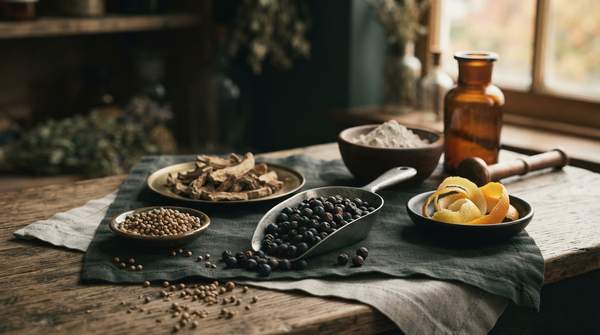
Ask what gin tastes like and most people will say juniper. That answer is correct but incomplete. For centuries, the "classic" gin flavor has been built from an accord of five botanicals: juniper, coriander, angelica root, citrus peel, and orris root. Each contributes a distinct aroma and a distinct technical job, and understanding the division of labor between them is the difference between tasting gin as "pine-flavored vodka" and tasting it as a constructed, balanced spirit. Here are the five building blocks, what they bring, and how they work together.
The Quintessential Five: Building Blocks of Classic Gin
The gin specialists at The GIN is IN describe this group as an accord that gins have relied on for centuries to create the "classic" gin flavor. The word is borrowed from perfumery, and it is apt: these five ingredients are not merely mixed, they are balanced so that each supports the others. Juniper is the only botanical that must be included in gin by law, as the Wine & Spirit Education Trust's educators note, and beyond it a distiller may use anything affordable and available. Yet most gins, old and new, still return to the same five-part foundation.
Beefeater's botanical guide groups the classic ingredients by function rather than flavor: juniper and coriander seed as foundation botanicals, angelica and orris root as aroma-binding roots, and lemon, orange, and grapefruit peels as the citrus category. That functional sorting is the key to the rest of this list. Some botanicals add freshness, some add warmth, and others help carry the aromas of everything else in the still.
Juniper: The Heart of Gin
Start with the non-negotiable one. Gin must have a "predominant" flavor derived from juniper, a requirement written into the legal definition in many places. WSET's educators put it plainly: juniper berries give gin its characterful and invigorating pine-like quality, and gin simply isn't gin without them.
But juniper is not a single note. The GIN is IN identifies five primary facets through which it manifests: pine-forward, herbaceous, green, resinous, and waxy. Roner, the Italian distillery, adds descriptors of resinous, balsamic, and fresh. This range matters in practice, because two juniper-led gins can taste strikingly different depending on which facet the berries and the distillation emphasize. When you taste a gin and perceive pine needles, crushed herbs, or a waxy green character, you are tasting different faces of the same required botanical.