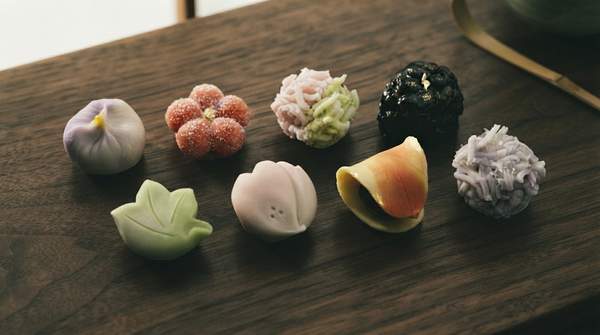
Wagashi, the traditional confectionery of Japan, are not simply sweets. Their designs and ingredients are deliberate expressions of the changing seasons, crafted from natural materials like bean pastes, rice flour, and pickled cherry leaves, and shaped into the forms of fruits and flowers. This artistry is inseparable from the tea ceremony: the finest wagashi, known as jo-namagashi, are made specifically to accompany matcha, and their seasonal motifs embody the aesthetic philosophy of wabi-sabi—simplicity, rustic beauty, and an appreciation of impermanence. Understanding a single sweet's colors and shapes, I want to show you, opens a window onto centuries of Japanese culture.
Wagashi: A Sweet Reflection of Japanese Culture
When you first encounter wagashi, you might hesitate to eat something so carefully made. That hesitation is part of the point. Wagashi are renowned for delicate flavors, intricate designs, and seasonal variation, and they represent what one cultural introduction calls "a profound connection to the Japanese aesthetic and philosophy." They are simultaneously a taste, a visual object, and a cultural statement.
Their history is intertwined with the evolution of Japanese society itself, reflecting what that same account describes as the nation's reverence for nature, its refined craftsmanship, and the art of savoring the ephemeral beauty of each passing season. In other words, a wagashi is designed to be temporary. Its beauty peaks and passes, like the cherry blossoms it often imitates.
Regional traditions deepen this cultural layer. As the Japan Society explains, wagashi vary immensely from season to season and from region to region, with unique traditions throughout Japan. In Matsue, for example, wagashi making flourished during the Edo period (1603–1868), when the castle town's artisans catered to samurai, daimyo lords, and common people alike. Even the names of older sweets persist: descendants of the historical tsubaimochi survive today as tsubakimochi, a sign of how deliberately this culture preserves its own past.
A Brief History of Japanese Confectionery and the Tea Ceremony
The bond between sweets and tea is very old. According to Japan's National Diet Library, the 14th-century anthology Kissaorai—a collection of letters about tea drinking—provides one of the earliest descriptions of serving green tea and sweets together. The pairing was already established practice, not a later invention.
A scene from the same period makes the connection vivid. In Bokie ekotoba, a mid-14th-century illustrated work depicting the life of Kakunyo, the third caretaker of Honganji Temple, servants prepare in the kitchen for a tea ceremony while a Buddhist monk walks the corridor carrying a large tray assumed to be full of confectionery to be served with green tea. Sweets, in other words, were part of tea culture from its documented beginnings.
Later history carried the tradition forward. The Edo period saw wagashi making expand in castle towns like Matsue, where the influential lord Harusato Matsudaira (1751–1818), known as Fumai, was famous for his devotion to chanoyu, the tea ceremony. Even the Shogun's court participated: thousands of rice cakes and red bean jellies (yokan) were displayed in the great hall of Edo Castle and given by the Shogun to feudal lords—a custom that faded after the Meiji Period but whose date is still commemorated by the Japan Wagashi Association as "Wagashi Day."