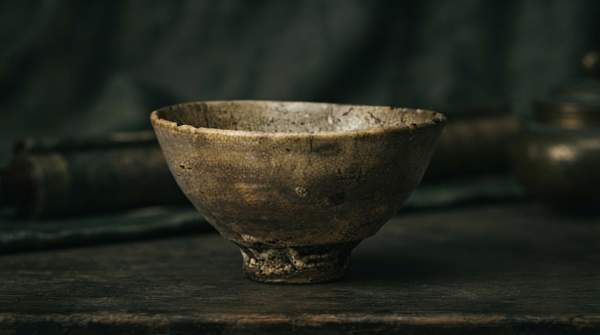
When a guest lifts a Japanese tea bowl, they are holding more than a vessel for whisked matcha. The bowl's uneven rim, its rough clay body, the worn sheen of a glaze cracked by fire—these are deliberate expressions of an aesthetic philosophy. Wabi-sabi, the Japanese ideal of tranquil simplicity and beauty in age, is not merely an abstract appreciation of imperfection; it is built into the physical design and materials of tea ceremony utensils. Understanding how to read those features opens the door to ichi-go ichi-e, the principle that each gathering happens once and can never be reproduced.
The Philosophy of Wabi-Sabi: Simplicity, Imperfection, and Age
Wabi-sabi resists precise definition. As the University of Michigan's Kelsey Museum of Archaeology exhibition on the aesthetic explains, wabi can be translated as "tranquil simplicity" and sabi as "patina or rust," referring to the beauty that comes with age and the wear of daily use. The two terms together point toward an aesthetic found in objects that are weathered and worn from use and valued for the "story" they hold, as a history of the tea ceremony from the SHEM Center for Spirituality and Healing puts it.
Even practitioners caution against pinning the concept down. Tea Ceremony Kyoto's Tyas Sōsen notes that a definitive verbal definition of wabi-sabi cannot be achieved; the originators of the style used abstract allegories rather than formulas. He traces wabi to an original sense of loneliness, likened to a solitary hermit in a rustic mountain dwelling. Wabi-sabi, in other words, is less a set of rules than an emotional experience of things as they in essence are—an important caveat for anyone expecting a checklist.
Within the tea ceremony, this aesthetic sits alongside four guiding principles that the SHEM Center identifies: harmony, respect, purity, and tranquility—qualities that invite reflection and mindful practice. The long history of care and use given to each tea article, the same source notes, is part of what gives those objects their meaning.
Embodying Wabi-Sabi: Characteristics of Tea Ceremony Utensils
The aesthetic did not arise in a vacuum of theory. According to the Kelsey Museum, with the development of the tea ceremony in the sixteenth century, utensils exhibiting the wabi-sabi aesthetic became popular—and, tellingly, they were often used alongside elegant imported Chinese vessels to create striking visual contrasts. Rustic Japanese bowls were set against polished continental luxuries, and the humble wares held their own. The museum's collection of such ceramics spans from the late sixteenth century to 2011, evidence that this ideal has remained continuously vital rather than becoming a historical relic.
What does the aesthetic look like in an object? The SHEM Center describes wabi-sabi as qualities of aesthetic asymmetry, irregularity, and rustic simplicity. A tea bowl may lean slightly; a jar's glaze may pool unevenly; a water vessel's clay may remain coarse and visibly hand-formed. None of this is sloppy workmanship. The irregularity is the point—an object that resists mechanical perfection asks the viewer to notice it as an individual rather than as one interchangeable copy among thousands.
The signs of age carry equal weight. A patina acquired through years of handling, a surface worn where thumbs rest, a glaze that has crazed over decades of hot water—these mark a utensil as lived with. The wear records use, and use records relationship. In this framework, a pristine object would have nothing to say.
Reading Philosophy in Tea Utensils: An Explanatory Model
The table below maps each philosophical principle onto the observable characteristics a reader can identify in an actual utensil, moving from abstract idea to concrete feature.
| Philosophical Principle | Observable Utensil Characteristic | Example |
|---|---|---|
| Wabi (tranquil simplicity) | Humble, unpretentious aesthetic; natural, unrefined materials | A coarse, visibly hand-formed clay bowl used beside an elegant imported Chinese vessel to create contrast |
| Sabi (beauty in age and wear) | Patina and surfaces worn from daily use | A glaze crazed and mellowed by years of handling, valued for the "story" it holds |
| Fukinsei (asymmetry and irregularity) | Irregular shapes, uneven glazes, deliberately imperfect forms | A tea bowl with an uneven rim and glaze that pools unevenly in the firing |
| Ichi-go ichi-e (one time, one meeting) | Unique, handmade, imperfect objects that cannot be duplicated | A one-of-a-kind bowl whose individuality reinforces that this gathering will never recur |
Read the table as a chain, not four separate rows: the simplicity of wabi keeps a utensil humble, the irregularity of fukinsei makes it unique, and the wear of sabi ties that uniqueness to time. Together they produce an object that supports ichi-go ichi-e—an object worth full attention precisely because it will never be repeated.
Ichi-go Ichi-e: Treasuring the Unique Moment
The phrase ichi-go ichi-e—"one time, one meeting"—is attributed within tea tradition to Sen no Rikyū and his master Takeno Jōō, whose philosophy held that each meeting should be treasured because it can never be reproduced. Rikyū, remembered as perhaps the best-known and still-revered historical figure in tea, formalized the "way of tea" in the sixteenth century, and his principles of harmony, respect, purity, and tranquility remain central to the practice.
Tea ceremony is not about the taste, it is all about enjoying the moment and remembering that this moment will never come back again.
That is how Adam Sensei of the Maikoya tea experience in Kyoto summarizes Rikyū's simple phrase, adding that the ceremony resembles meditation in its demand for complete focus. A Kyoto tea ceremony blog describes the same attention in sensory terms: practitioners notice how light falls through paper screens, how water sounds as it is poured, how the whisk creates foam—no phones, no planning ahead, just full presence to an unrepeatable moment. That source frames impermanence as a Zen teaching embraced as beautiful and liberating rather than sad.
The utensils carry this philosophy materially. A unique, handmade, irregular bowl—no two fired alike—mirrors the gathering itself: singular, unrepeatable. When the host selects that bowl for this day's guests, the object's individuality becomes a physical reminder that this exact combination of people, weather, and tea will not occur again.
Embracing the Moment: A Practical Conclusion
When engaging with Japanese tea ceremony utensils, focus on their inherent simplicity, imperfections, and signs of age to appreciate their connection to wabi-sabi and the unique nature of each ceremony. The measurable indicator of success is a deeper appreciation for the aesthetic and philosophical depth of these objects—recognizing the deliberate design choices that embody wabi-sabi and ichi-go ichi-e. The next time a bowl's rim bends slightly off-center or its glaze bears a crack worn smooth by use, those features can be read as intended philosophy rather than flaw: an invitation to give one unrepeatable moment complete attention.
Sources
- Exhibitions
- Shemcenter
- Wabi Sabi Meaning - WHAT IS THE MEANING OF WABI SABI - Tea Ceremony — Tea Ceremony Kyoto
- What is Ichi Go Ichi E? — Tea Ceremony Japan Experiences MAIKOYA
- Ichigo Ichie Meaning: Once-in-a-Lifetime Moments in Tea — Tea Ceremony Canon Kyoto - Authentic Tea Ceremony & Kimono Rental near Fushimi Inari Shrine