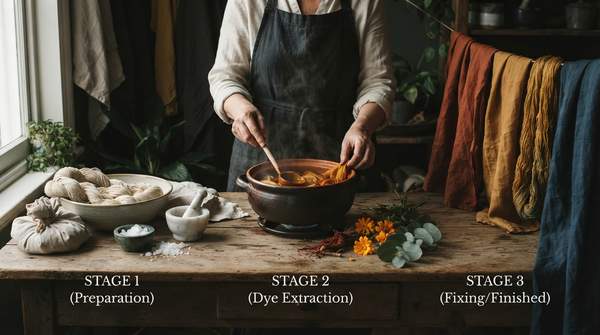
Natural dyeing is an ancient craft now undergoing a genuine revival, and understanding it is less about memorizing recipes than grasping a simple three-stage system: prepare the fiber, extract the color from the plant, then unite the two in the dye bath. The pivot of the whole process is the mordant—a substance, usually a metal salt such as alum or iron sulphate, that many plant dyes cannot do without. Without it, color may wash away; with it, the dye bites into the fiber and even shifts in hue. This article walks through that workflow, traces why natural dyes faded after synthetics arrived in the nineteenth century, and examines the modern technologies making the practice viable again.
The Enduring Art of Natural Dyes: A Historical and Modern Perspective
For most of human history, every colored textile began as a plant, and the techniques for coaxing pigment from leaves, roots, and bark were closely guarded knowledge, passed through generations and deeply intertwined with cultural heritage. That inheritance nearly vanished within a few decades of industrial chemistry's rise, when petroleum-based synthetic dyes became the default for both commercial textile production and craft dyeing, as documented accounts of the craft's history record.
Yet the same records show the tradition never fully died: figures like William Morris, the founding figure of the Arts and Crafts movement, spent years at his Staffordshire dye works mastering plant-based processes and experimenting with the revival of old methods, precisely because he loathed the colors of the fashionable aniline dyes of his era. That tension—between industrial efficiency and the irreplaceable character of natural color—is the same one driving today's renewed interest.