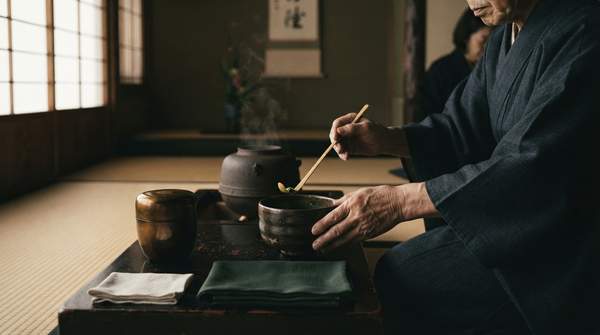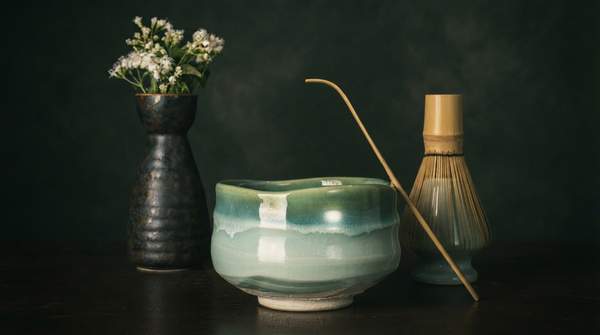
In the Japanese tea ceremony, a bowl is never just a bowl, a whisk never just a whisk. Each utensil is chosen for the way its material shapes both the practical act of preparing tea and the aesthetic experience of the gathering. Three materials dominate the most essential implements: ceramic for the chawan (tea bowl), bamboo for the chasen (whisk) and chashaku (tea scoop), and lacquered wood for containers such as the natsume and mizusashi. Understanding why each material is paired with each utensil reveals how the ceremony's philosophy lives in physical form.
Introduction: The Philosophy of Tea Utensils
Tea utensils are described by cultural guides as integral to the ceremony's purpose rather than incidental tools. As one introduction to the ceremony's symbolism puts it, each utensil "has its own symbolism and is carefully selected to create a sense of harmony and balance," with the ceremony cultivating "mindfulness, respect, and tranquility." The natural materials themselves—bamboo and ceramic foremost—reflect the importance of nature in Japanese culture. Guides to the Way of Tea also note that utensils are made with the notion of muda ga nai, meaning no waste, embodying a spirit of minimalist design in which nothing decorative is added without purpose.
This framing establishes the interpretive lens for everything that follows: when a tea host selects a bowl or carves a scoop, the choice is understood as expressing values, not merely solving a functional problem. The three materials examined below—ceramic, bamboo, and lacquer—each carry this dual burden of utility and meaning.
Ceramic: The Soul of the Chawan
The chawan is perhaps the most central utensil of the ceremony and, for many practitioners, their most prized possession. As a tea retailer's introductory guide explains, "every detail" of a chawan is used for artistic expression, from the humblest Raku bowl to the most glamorous Tenmoku chawan. Each bowl even has a designated front or shoumen, determined either by the potter through a decoration or glaze pattern, or chosen by the host if no such distinction exists. The bowl is selected to match the occasion and the season, with its shape, size, and color chosen to create a specific atmosphere.
The tactile qualities of fired clay are central to this. The chawan is described as shaped "for warmth and balance, often with a slightly imperfect glaze to reflect nature"—an imperfection that is not a flaw but a deliberate artistic gesture. Historically, the tea bowl itself was transformed for the ceremony: it originated in China, and then during the sixteenth century the tea master Sen no Rikyu designed the first bowl made specifically for the Japanese tea ceremony, according to an account from a Kyoto tea farm.
Material Significance in Tea Utensils
The table below gathers the evidence into a single framework, correlating each material's documented physical characteristics with its described function and symbolic role. Reading across the rows shows the pattern: every material is chosen because its tangible qualities serve both the hand and the ceremony's larger aims.
| Material | Key Utensils | Practical Properties | Aesthetic and Philosophical Significance |
|---|---|---|---|
| Ceramic | Chawan (tea bowl) | Warmth, balance, and tactile quality in the hand; hand-formed uniqueness | The ceremony's centerpiece; slightly imperfect glazes reflect nature, and details of shape and glaze serve artistic expression |
| Bamboo | Chasen (whisk), chashaku (tea scoop) | Flexibility for whisking matcha; the chasen is carved from a single piece of bamboo; scoops transfer powder precisely | Connection to nature and simplicity; tea masters historically carved their own chashaku to project aesthetic sensibility and philosophy into the form |
| Lacquer | Natsume (tea caddy), mizusashi (fresh water container) and its lid | Durable protective finish; smooth surface suited to storage of powdered tea and fresh water | Subtle elegance over display; the plain exterior of the natsume emphasizes restraint, and lacquerware joins the objects that set the host's aesthetic theme |
Bamboo: Nature's Grace in Motion
Bamboo serves where flexibility and precision matter most. The chasen is made of a single length of bamboo and used to whisk both thick koicha and thin usucha tea, its pliant tines blending the powder into liquid. The chashaku transfers matcha from its container into the bowl; most are carved from bamboo, though versions in ivory, wood, or lacquer also exist. Its practical role is simple, but its standing is not: one guide ranks the chashaku second only to the tea bowl in spiritual significance within the ceremony.
That standing comes partly from history. Renowned tea masters carved their own chashaku by hand, projecting "their aesthetic sensibilities and philosophical outlook into the form itself," with a maker's signature and personal name (mei) often inscribed on the bamboo tube or accompanying box. The bamboo also carries a practical humility: as one source notes, the chasen is "clearly a consumable"—with repeated use, its tips can break or thin out and lose their spring. A material that wears with use fits a practice built on attention to the transient.
Lacquer: Refined Elegance and Preservation
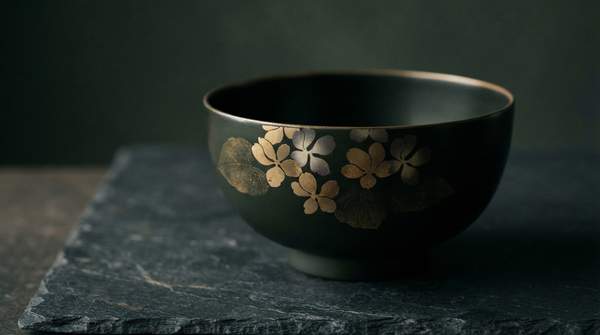
Lacquer's domain is containment. The mizusashi, the lidded fresh-water container used for refilling the kettle and rinsing the used chasen, comes in many shapes and styles but is typically made from ceramic or lacquered wood, according to a utensil guide from a tea retailer. Alongside the chawan and the natsume, it is one of the primary objects that decides the aesthetic theme the host sets. The natsume—the tea caddy holding the powdered matcha—carries its own statement: plain on the outside, emphasizing subtlety over display.
Lacquer also participates in the ceremony's economy of repair. Chipped or broken ceramic bowls, lacquerware, and metal tools can be mended with kintsugi, a traditional technique using lacquer and gold powder that one guide describes as adding "a new layer of beauty (a new 'landscape')" and aligning with contemporary values of sustainability. Lacquered tools are noted to be sensitive to extreme dryness, a material property with real storage consequences—but the deeper point is the aesthetic one: a quiet, dark surface that holds rather than announces its contents.
Connecting Materials to the Tea Way
Considered together, the three materials form a coherent system. Ceramic grounds the ceremony in earth and touch; bamboo supplies the living, flexible instrument of preparation; lacquer provides quiet enclosure. Each participates in the spirit of hospitality (omotenashi) that one cultural source describes as anticipating the guest's needs before they ask, with the utensils' shapes, textures, and placement creating an atmosphere in which the guest feels seen and welcomed. The materials also slow the ritual down, inviting careful whisking, attentive pouring, and silence.
The boundary of this account should be stated plainly: it concerns the symbolic meaning of materials, not a comprehensive survey of every utensil, and it does not offer instructions in performing the ceremony or caring for tools beyond what material properties themselves imply.
Embracing the Materiality of Tea
To fully appreciate the Japanese tea ceremony, one should observe and reflect on the specific materials of the utensils, understanding how they embody aesthetic principles and enhance the ritual experience. The measure of that understanding is concrete: a heightened awareness of the texture, weight, and visual qualities of the chawan, chasen, and natsume during a tea ceremony, and a recognition of their connection to nature and wabi-sabi. A bowl's warmth in the palms, a whisk's gradual softening, a caddy's plain dark surface—these are not incidental sensations but the places where the ceremony's philosophy becomes tangible.
Sources
- Ultimate Guide To Japanese Tea Ceremony Utensils — Katachiware
- The Hidden Meaning Behind Japanese Tea Utensils — NAKAMURA TOKICHI HONTEN ONLINE STORE
- Introductory Guide to Tea Ceremony Utensils — Tezumi
- Utensils for Japanese Tea Ceremony — Tea Ceremony Japan Experiences MAIKOYA
- Quick Intro to Japanese Tea Ceremony Utensils – Kyoto Obubu Tea Farms — Obubutea
- Japanese Tea Ceremony Utensils: Names and Roles — Bespoke Discovery