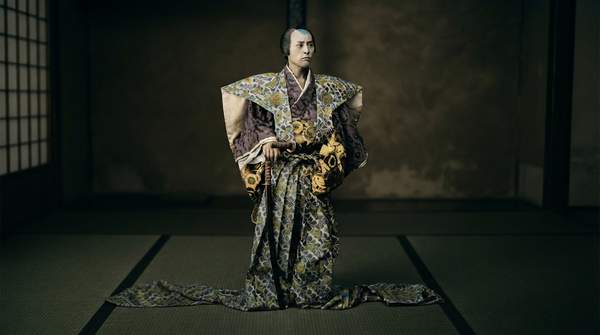
The kimono did not simply appear; it was made, unmade, and remade by whoever held power in Japan. When you trace the garment from the layered silks of the Heian court to the belted kosode of the Edo townsman and finally to the formal "kimono" of the Meiji era, you are tracing the country's own political history in cloth. The word itself is a latecomer: as Cynthia Green notes in her history of the garment for JSTOR Daily, "kimono" means "wearing thing," and the garment only acquired that name from the Meiji period (1868–1912) onward. Before that, its ancestor was an undergarment called the kosode. I want to walk you through each stage, because the silhouette, the sleeves, and even the vocabulary changed precisely when Japan's ruling class did.
The Kimono's Ancient Roots: From Layered Robes to Undergarment
The story begins with divergence. In the late ninth century of the Heian period (794–1185), Japanese clothing began to move away from Chinese styles, giving rise to uniquely Japanese garments such as the jūnihitoe, the famous many-layered robe of court aristocrats. This was clothing made for a court culture that prized display, refinement, and the subtle art of combining colors in layered ensembles.
Yet the kimono's true ancestor was not the glittering outer robe but what lay beneath it. Members of the court and the warrior class wore white kosode as underwear during this period. The kosode—literally "small sleeves"—was characterized by smaller armholes, and it was cut from straight pieces of fabric sewn together into a garment that fit every sort of body shape. Green describes it as easy to wear and infinitely adaptable. That practical quality, born in obscurity as an underlayer, is what would eventually carry it to dominance.
So the Heian period gives us the essential paradox of kimono history: the most visible garments belonged to a tiny court elite, while the humble kosode waited in the wardrobe, worn by courtiers and warriors alike, for the moment society would change around it.
Kamakura and Muromachi: The Rise of Samurai Practicality
That moment came when political power shifted from the court aristocracy to the warrior class. As the samurai rose to prominence, the extravagant, layered aesthetic of the court gave way to simpler and more functional attire. A garment that allowed movement suited a ruling class whose authority rested on the sword in a way that flowing court robes never could.
The transformation was gradual but decisive. By the Sengoku period, corresponding to the late Muromachi period (1336–1573), the kosode—originally a simple undergarment—had developed into a more elaborate outer garment, becoming the direct predecessor of the modern kimono. This is the pivotal turn in the whole history: the underlayer stepped outside.
Stella Polyzoidou, writing for TheCollector, adds a detail that shows how far the aesthetic had traveled from Heian refinement. The kosode worn by Muromachi-period samurai ladies favored small-scale patterns, in contrast to the large, bold motifs that would come later. Restraint, not display, marked the warrior era's dress. The courtly ideal of layered color had been replaced by a plainer, more practical sensibility that matched the new military government's values.
The Edo Period: Kosode as a Canvas for Social Status
Under the Tokugawa shogunate, the kosode became universal. In the early 1600s, the first Tokugawa shogun unified Japan into a feudal shogunate, and the resulting Edo period (1603–1868) spanned 264 years during which Japanese culture developed with almost no foreign influence. Green makes a striking claim about what the garment meant in that closed world: the kosode was one of the key elements of what it meant to be Japanese, and every Japanese person wore it, regardless of age, gender, or socio-economic position. On the rare occasions a Japanese person met a foreigner, the visible distinction was that the foreigner did not wear kosode.
But universality did not mean equality. Edo Japan was a stratified society, and since everybody wore kosode and the cut hardly changed, messages were worked into the garment itself. Style, motif, fabric, technique, and color explained who you were—your social status, your wealth, even your literary prowess—and these choices were often subject to sumptuary regulations. The kosode became a complex system of social signaling within a rigid hierarchy: a shared language in which every thread could announce rank.
The garment's construction also evolved in this era. The overall silhouette transformed during the Edo period due to the evolution of the obi, the sleeves, and the style of wearing multiple layered kimono. Polyzoidou records how sleeve treatment encoded a woman's stage of life: married women's sleeves were sewn to the body of the garment, while young unmarried women wore increasingly long sleeves marking their transition from childhood to adulthood. Even the length of a sleeve could tell a stranger who you were.
Kimono Evolution: A Historical Timeline
The table below sequences the garment's evolution chronologically, pairing each stage with the dominant social force that drove it. Read down the first column and you get Japan's political history; read down the second and you get the garment's biography. The two move together.
| Historical Period | Dominant Garment/Style | Key Features | Social/Cultural Driver |
|---|---|---|---|
| Heian period (794–1185) | Layered courtly robes such as the jūnihitoe; kosode worn as underwear | Japanese clothing diverged from Chinese styles; white kosode with small armholes worn beneath court dress | Courtly aesthetic and aristocratic display |
| Kamakura and Muromachi periods (1185–1573) | Simple kosode-style garments; kosode becomes outerwear by the late Muromachi/Sengoku era | Extravagant courtly styles replaced by functional attire; small-scale patterns favored by samurai ladies | Rise of the samurai class and its practical values |
| Edo period (1603–1868) | Kosode as universal unisex outer garment | Cut hardly changed; obi, sleeves, and layering evolved; style, motif, fabric, and color signaled status, wealth, and literary prowess, often under sumptuary regulations | Tokugawa isolation and rigid social stratification |
| Meiji period (1868–1912) | Garment formally named "kimono"; Western dress adopted for daily wear | Transition from everyday wear toward formal attire; men's kimono wearing declines | Westernization after Japan's ports opened; government embrace of Western military dress |
| Post-WWII era | Modern kimono canon | Types formalized; age and social class matter less than occasion; new varieties invented for new social situations | Fabric shortages, a generation unfamiliar with everyday kimono, and revival by traditional kimono shops |
Notice the pattern the table reveals: each time the ruling class changed, the garment changed with it—and each change narrowed the gap between the elite garment and the common one, until the kosode belonged to everyone and distinction had to be woven into its decoration instead.
Meiji Restoration: Westernization and the Birth of the 'Kimono'
The Meiji Restoration inverted the garment's social position. As Japan's ports opened and trade with the West developed, Japanese fashion adjusted to Western standards. Polyzoidou identifies a telling mechanism: a major impulse toward Westernized clothing came from military dress, as the Japanese government sought to move away from the samurai leadership of the past in favor of the professional military style of the British Empire. The kosode, so recently the badge of what it meant to be Japanese, began its retreat from everyday life—first for men, whose kimono wearing declined as Western clothing spread.
It was precisely at this moment of foreign influence that the garment received its Japanese name. Only from the Meiji period onward was it called kimono. The irony is sharp: the "wearing thing" became a specific, named garment only when it was no longer the thing everyone wore. Naming it was a form of preservation—distinguishing it from the Western clothes flooding in, and beginning its transformation from daily dress into a marker of Japanese identity.
The Modern Kimono: Enduring Cultural Significance
The final stage of formalization came after World War II. The modern kimono canon was roughly formalized in the postwar years, following fabric shortages, a generation unfamiliar with wearing kimono in everyday life, and the revival of kimono sales by gofukuya, the traditional kimono shops. In previous centuries, kimono types had not been so distinct; age and social class played a much larger role in determining what one wore than they do now. Beginning in the Meiji period, with the abolition of class distinctions, kimono varieties changed as Japanese society did, with new varieties invented for new social situations.
What emerged is the kimono you recognize today: a codified garment for formal occasions rather than a flexible everyday wardrobe. Though the basic shape of the kimono has not changed in centuries, its proportions have varied across eras—and its meaning has varied even more, from underwear to universal dress to ceremonial symbol.
Appreciating the Kimono's Enduring Legacy
To fully appreciate the kimono's cultural significance, recognize that its form and function are deeply intertwined with Japan's historical social and political transformations. Every element you see in a kimono today—the straight-cut sleeves descending from the kosode's small armholes, the obi that matured in the Edo period, the occasion-based categories of the modern canon—is a fossil of a particular power structure: the court that layered it, the samurai who simplified it, the shogunate that stratified it, and the modernizing state that named it.
The measurable indicator of this legacy is the continued use of kimono for formal events and cultural celebrations, reflecting its formalized status as a traditional garment. When you next see one—at a wedding, a coming-of-age ceremony, a festival—you are not looking at a static tradition but at a thousand-year record of Japan's social history, worn on the body and still in use.