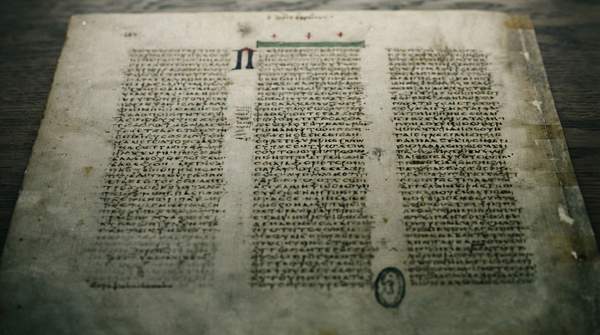
The materials humans have written on were never neutral choices. Parchment, its finer cousin vellum, and paper each came from different sources—animal skin versus plant fiber—and each required a distinct preparation process that determined how durable, smooth, or affordable the finished surface would be. Those properties, in turn, shaped what texts could be written, how they were bound, and how readers could access them. Here is how the three materials differ, and how parchment's strength helped transform the scroll into the codex, the format we still recognize as the modern book.
The Evolution of Writing Surfaces: From Animal Skin to Plant Fiber
Writing surfaces fall into two broad families in this story: prepared animal skin and processed plant fiber. Parchment first emerged as a common writing surface in response to a shortage of papyrus in Pergamon in the second century BCE, according to Cornell University Library's online exhibition on writing materials; tradition, as the historical survey Historyworld recounts, credits its invention to Eumenes II, ruler of Pergamum on the west coast of Turkey from 197 to 159 BC. The word "parchment" itself derives from a variation of Pergamum. Paper, by contrast, was a plant-based invention from China, and it took a different route westward before transforming European text culture.
Parchment and Vellum: The Durable Legacy of Animal Skins
The National Archives' preservation staff draws a useful distinction: "parchment" is a general term for an animal skin prepared for writing or printing, usually calf, goat, or sheep skin, while "vellum"—from the French veau—refers specifically to parchment made from calf skin. Both share a common, involved process. Once the skin is removed from the animal and hair or flesh is cleaned away, it is stretched on a wooden frame. While stretched, the parchminer scrapes the surface with a special curved knife.
Cornell's exhibition adds the finishing steps: the skin was soaked in lime and scraped to remove hair, then burnished with pumice to create a smooth writing surface. Vellum, often coated, was made exceptionally smooth. The calf-skin source and extra refinement are what made vellum the finer, thinner grade. The result of this labor was a writing surface that was strong and flexible—a quality that mattered enormously, as we will see.