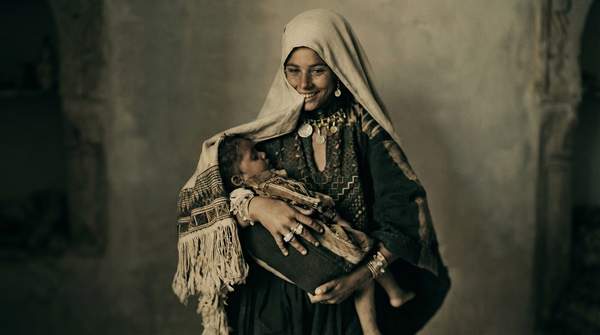
Before 1948, a single embroidered Palestinian thobe could tell you where a woman was from, and roughly what her life looked like. After 1948, the same stitches began telling a different story: one of displacement, resistance, and a national identity stitched in thread when flags could not be flown. That is the arc of Tatreez, the traditional Palestinian embroidery that began as a regional and social identifier and became, over the course of the twentieth century, one of the most recognizable visual languages of Palestinian identity.
The Enduring Art of Tatreez: A Cultural Tapestry
When I look at a piece of Tatreez, I am not looking at decoration. The Palestinian Museum, whose exhibition "Labour of Love: Embroidering Palestinian History" ran from October 2022 to January 2023, frames folk fashion as "a catalyst for exploring the social history of Palestine as a whole, not solely the history associated with women's work." By centering women's labor, the museum argues, Tatreez is woven into Palestinian society's social, economic, and political fabric across every historical stage that produced it.
That framing matters, because it resists the easy dismissal of embroidery as mere domestic craft. Practiced by rural Palestinian women for centuries, Tatreez has historically been connected to significant milestones in their lives, from childhood to adulthood to marriage, as the museum's curatorial account notes. The stitches marked a woman's passage through her own life even as they marked her place in a wider community.
Most villages shared a common repertoire of motifs, but with variations that were slight, yet discernible, as Jamilla Hashem writes in a historical account for Handmade Palestine. A trained eye could read a thobe the way one might read a signature. That legibility is the foundation of everything Tatreez later became.
Regional Threads: A Comparative Look at Pre-1948 Tatreez Styles
To see how a thobe communicated origin, compare the traditions of the key regions side by side. The table below organizes the defining features that historical accounts attribute to each area. One caution: as Darzah's regional guide notes, these characteristics are identifying tendencies rather than rules that apply to every piece.
| Region | Key Characteristics / Motifs | Dominant Colors |
|---|---|---|
| Ramallah | Cross-stitch refined to a high degree of geometric regularity; the leech pattern (an S-curve motif) was particularly famous and recognized as a marker of the central highlands style; other motifs include birds, flowers, and the rooster, as seen in specific exhibitions. | Not specified in the available accounts |
| Gaza | Motifs including the Cypress Tree, Pasha's Tent, Stars, floral forms, and geometric architectural motifs. | Deep and dramatic palettes, frequently burgundy, red, dark blue, and black tones. |
| Jaffa / Beit Dajan | Embroidery moved beyond strict geometry toward fluid floral expression; brides were among the first to incorporate European silk threads. Key motif: Zahrat al-Burtuqal (Orange Blossom), symbolizing fertility and new beginnings. | A wider palette including oranges, pinks, and sea-greens, reflecting the city's citrus groves and coastal mood. |
Notice what the comparison reveals. Ramallah's geometric precision makes its pieces identifiable even in fragments, according to the FALASTIN regional guide. Jaffa's style, by contrast, absorbed the cosmopolitan influence of a Mediterranean trading city, embracing softer, illustrative motifs. Gaza's palette ran deep and dramatic. The differences were not accidents of taste; they reflected geography, economy, and local life.
The Evolution of Symbolism: From Local Craft to National Emblem
The transformation began with rupture. Following the forced displacement of Palestinians beginning in 1948, Hashem writes, the language of Tatreez evolved to continue reflecting Palestinian experiences. Village-specific styles lost some of their original social function when the villages themselves were emptied or their communities scattered. What replaced that function was something broader.
During this period, it was declared illegal to display the Palestinian flag. As a result, Palestinian women began incorporating the flag and its colors into their embroidery as a means of resistance to the occupation. Consequently, Hashem argues, Tatreez came to be a very important expression of the identity, heritage, and peaceful resistance of Palestinian women. The needle went where the flag could not.
Darzah's guide describes the shift with a useful pair of questions. Today, someone may wear a cypress tree, olive branch, flower, bird, star, or geometric motif because it connects them to Palestine as a whole rather than because they are identifying with one village. At the same time, contemporary artisans continue using historically regional designs, creating what Darzah calls a conversation between two levels of identity: "Where are you from?" and "What do you carry with you?" The same pattern can carry both a specific historical origin and a broader contemporary meaning.
Tatreez as a Symbol of Resistance and Identity (Post-1948)
The most vivid chapter in this transformation came during the First Intifada, from 1987 to 1993. According to the Palestinian Museum's exhibition account, embroidered thobes became a common sight during protests against Israeli occupation. These garments featured a blend of traditional designs, like cypress trees and horseshoes, with newer symbols such as doves, rifles, maps, and political slogans, thereby embodying the narratives of political struggle.
Read that mingling carefully, because it is the visual signature of Tatreez's evolution. The old regional vocabulary did not disappear; it was joined by a new political one. A single garment could hold centuries of village tradition and the immediate vocabulary of a street protest at once.
This is why the post-1948 story is not simply one of loss. The craft's adaptability, its capacity to absorb new meanings while retaining old ones, is precisely what allowed it to remain a vital cultural artifact through decades of political upheaval. When other national symbols were prohibited, the embroidery itself became the symbol.
Preserving a Legacy: Tatreez in the Modern Era
Today the two levels of identity that Darzah describes coexist in practice. Contemporary makers stitch historically regional designs alongside motifs chosen for their national resonance, and the tradition continues to be practiced in diaspora communities as well as in Palestine itself. Handmade Palestine reports that its collection is primarily stitched by women artisans in Gaza cooperatives, where the craft has become an important source of income generation in areas where women lack other income opportunities.
There are boundaries to what this article can tell you. It is not a how-to guide to embroidery techniques. The regional descriptions here rest on available historical accounts, not an exhaustive catalog of every village's patterns. And the commercial dimensions of modern Tatreez production fall outside this story's scope.
What the evidence does support is a craft in continuous, living use. The Palestinian Museum's framing of Tatreez as woven into society's social, economic, and political fabric "across the different historical stages that produced and continue to produce it" is not a description of a relic. It is a description of an art form still narrating its own history.
Tatreez: A Living Narrative of Palestinian Identity
Recognize Tatreez not merely as a craft, but as a dynamic and evolving visual language that continues to narrate Palestinian history and identity. If you want to see whether that claim holds, the measure is concrete: the continued presence and adaptation of traditional Tatreez motifs in contemporary Palestinian cultural expressions and diaspora communities. Look for the cypress tree, the orange blossom, the S-curve of the leech pattern, and the flag's colors reappearing in new garments, and you are watching a centuries-old language still being spoken.
Sources
- Palmuseum
- Traditional Embroidery: A Brief History of Palestinian Tatreez — Handmade Palestine | Fairly Traded & Handcrafted Gifts
- Palestinian Tatreez by Region: How Embroidery Tells You Where It Comes From — Darzah
- Tatreez Patterns by Region: Bethlehem to Gaza — FALASTIN