AI Storytelling Risks Eroding Art and Authorship, Raising Ethical Concerns.

When stories are introduced as AI-generated, readers are significantly less likely to become deeply transported into the narrative world, according to studies in nature .

AB
Aisha Bakri

June 7, 2026 · 4 min read

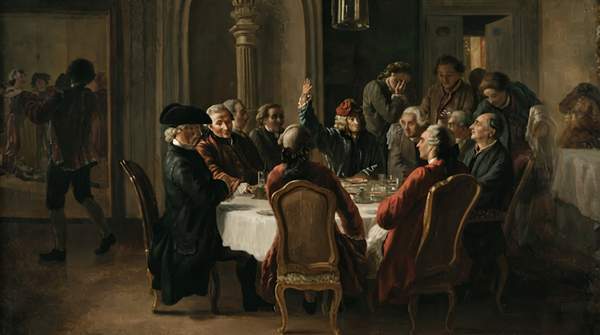
A futuristic library with AI screens replacing books, contrasted with a single traditional book, symbolizing the erosion of human authorship in storytelling.

When stories are introduced as AI-generated, readers are significantly less likely to become deeply transported into the narrative world, according to studies in nature. A profound psychological barrier is revealed: the mere suspicion of machine authorship disrupts engagement.

AI can generate vast quantities of narratives with increasing sophistication. Yet, these stories consistently fail to achieve the deep human connection and artistic integrity that define true storytelling. A core challenge is revealed by this tension: efficiency often compromises meaningful communication. The widespread adoption of AI in narrative creation thus risks a future where content volume overshadows artistic value, leading to a decline in human creativity and reader engagement. Companies leveraging AI for narrative generation unknowingly sabotage audience connection, as machine authorship acts as a psychological barrier to immersion.

The Erosion of Art and Authorship

Acclaimed science-fiction author Ted Chiang will deliver the Rock Ethics Institute’s 2026 Richard B. Lippin Lecture in Ethics on March 25. He will focus on generative AI and art, considering its incompatibility with art and raising fundamental questions about creativity and its origins, according to The Pennsylvania State University.

The use of AI in writing raises complex questions about authorship. Traditional definitions require intellectual contribution, but current ethical guidelines remain unclear on how to credit AI, according to pmc. Ambiguity complicates creative ownership, obscuring the intellectual property source.

AI-generated text also risks infringing existing work without attribution, raising intellectual property concerns, pmc reports. AI's ability to synthesize new content from vast datasets challenges established legal frameworks. The foundation of creative ownership and artistic definition is destabilized, as AI generates content without traditional human input, challenging art's core tenets.
The Illusion of Progress: 'Fair Use' and AI Art

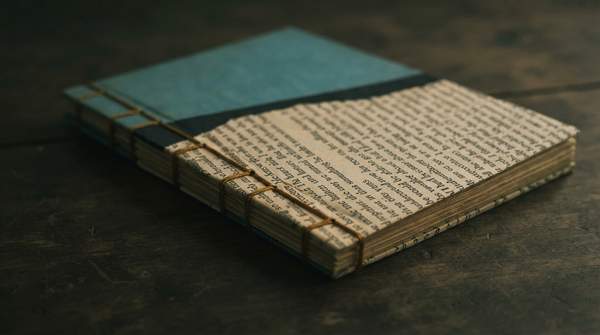
The United States District Court for the Southern District of New York ruled in favor of Google in 2013 regarding its Google Books project. This decision, based on fair use, public benefit, and the nature of copyrighted work, established a legal pathway for large-scale digitization and access to copyrighted material, framing it as a public benefit, according to absolutewrite.

However, this ruling does not directly address AI's role in creative generation. Google Books indexed existing works; AI systems generate entirely new content. Studies investigating recipient experiences with ChatGPT-created stories focused on narrative transportation, novelty, and enjoyment, according to nature. A crucial distinction between processing existing works and creating new ones is revealed by these studies.

The drive for efficiency and scale in content creation directly conflicts with these findings. Stories introduced as AI-generated significantly reduce narrative transportation and reader engagement, nature found. Pursuing efficiency in narrative production may be self-defeating, undermining audience connection. While Google Books suggests a path for AI to process copyrighted material for public benefit, consuming AI-generated narratives reveals a significant deficit in human connection. 'Fair use' does not extend to art creation.

Diminished Engagement and Dulling Human Skill

Stories introduced as AI-generated reduce the likelihood of deep narrative transportation compared to human-created stories, nature reports. A narrative's perceived origin profoundly affects its reception, a psychological phenomenon. The unique human touch in storytelling is not merely technical skill, but an unspoken connection readers seek with a fellow human consciousness, a barrier to immersion suggests. When that connection is absent or suspected, the narrative loses its power to captivate.

Concurrently, over-reliance on AI tools for manuscript writing can weaken essential writing and critical thinking skills, potentially undermining scientific discussions, warns pmc. Dependency threatens to degrade the faculties necessary for crafting compelling narratives. The explicit knowledge of AI authorship creates an immediate barrier to immersion for readers, while over-reliance on these tools degrades human skills essential for nuanced narratives, threatening both consumption and creation.

The Perpetuation of Bias and Future Risks

AI models can replicate and magnify biases present in their training data, potentially perpetuating biased viewpoints in literature reviews or research summaries, according to pmc. These biases, often inherent in historical texts, become amplified when AI systems are trained without careful curation or ethical oversight. AI-generated narratives thus risk becoming echo chambers, reinforcing existing prejudices.

The potential for systemic intellectual property exploitation also looms. The existing 'fair use' legal framework, established for mass digitization like Google Books, is ill-equipped to address AI's ability to generate new, potentially infringing content without proper attribution. A significant loophole for widespread intellectual property theft is created, eroding economic viability for human creators.

The inherent risk of AI perpetuating and amplifying existing societal biases means a future dominated by AI-generated narratives could lead to a less diverse, more homogenized, and ethically problematic literary landscape. Trust and representation are eroded, jeopardizing the rich tapestry of human experience storytelling traditionally represents.

The pursuit of AI-driven efficiency in storytelling is a Faustian bargain. It risks devaluing art through pervasive bias and IP infringement, and erodes critical human skills essential for genuine creative expression, as warned by pmc. By Q3 2026, content platforms prioritizing AI-generated volume over human-crafted depth will likely see a continued decline in genuine audience engagement and trust, facing tangible consequences in a market that values connection above mere content.