Arts and Crafts principles embrace handmade for modern living

A recent survey found that 70% of millennials and Gen Z consumers are willing to pay more for products demonstrably handmade and ethically sourced, a stark reversal from previous generations' preferen

JL
Jing Mei Lin

June 8, 2026 · 3 min read

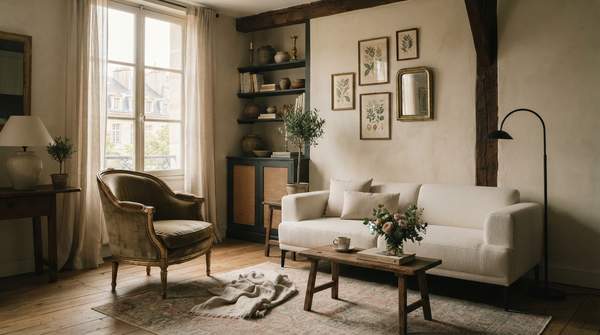
A modern living room showcasing handmade decor, emphasizing the beauty and value of artisanal craftsmanship in contemporary homes.

A recent survey found that 70% of millennials and Gen Z consumers are willing to pay more for products demonstrably handmade and ethically sourced, a stark reversal from previous generations' preference for mass-produced affordability, according to the Authenticity Report 2023. The digital age has made mass production more efficient than ever, yet it simultaneously fuels a powerful counter-movement towards the unique, imperfect, and human-made. Based on this growing consumer demand and the increasing visibility of artisan markets, the principles of the Arts and Crafts movement are likely to continue shaping purchasing decisions, pushing industries toward greater transparency and valuing human skill over pure automation. Etsy, for instance, reported 15% year-over-year growth in gross merchandise sales for handmade items, reaching $13.3 billion, according to the Etsy Annual Report 2023.

The Resurgence of the Artisan Economy

  • Independent artisans report increased demand for custom-made and personalized items.
  • Local artisan markets and craft fairs have seen a rise in visitor numbers and sales.
  • Consumers perceive handmade products as having higher quality, greater uniqueness, and a stronger narrative than factory-made alternatives.

This collective shift empowers individual craftspeople and strengthens local economies, fostering opportunities for creative entrepreneurs.

Seeking Soul in a Digital Age

The original Arts and Crafts movement emerged in the late 19th century as a reaction against industrialization, a historical parallel to today's digital fatigue, according to Smithsonian Magazine. Engaging with handmade objects reportedly reduces feelings of alienation, promoting grounding in a hyper-connected world, as noted by Psychology Today. The pandemic further highlighted supply chain vulnerabilities, prompting renewed interest in local production. Consumers increasingly prefer sustainable handmade alternatives due to environmental concerns. This modern embrace directly responds to hyper-digitalization's downsides, echoing the movement's original motivations for human connection and mindful consumption.

Challenges and Transformations for Industry

While large manufacturers now incorporate "handmade-inspired" elements or artisan collaborations to meet demand, many artisans struggle with pricing their work competitively against mass-produced items. This tension between market demand and artisan viability is compounded by a growing shortage of skilled craftspeople in traditional trades. Despite these challenges, the UK craft sector contributed £3.4 billion to the economy in 2022, a 20% increase from five years prior, according to Crafts Council UK. The handmade movement thus offers significant economic growth, yet it simultaneously challenges traditional industries to address skill preservation and fair pricing.

The Future of Craft and Consumption

Experiential retail, featuring live craft demonstrations, is a growing trend to attract customers, while vocational schools and art programs report renewed interest in traditional craft techniques. This convergence points to a deeper appreciation for the craft process itself. Furthermore, the inherent longevity and repairability of handmade items contribute significantly to a circular economy, reducing waste. Niche luxury markets for bespoke handmade goods are projected to grow by 8% annually over the next five years, indicating that craft skills are increasingly valued, consumption is becoming more mindful, and handmade aesthetics are integrating into mainstream markets.

Understanding the Arts and Crafts Revival

What are the key features of Arts and Crafts architecture?

Arts and Crafts architecture emphasizes natural materials, often left in their natural state, with handcrafted details that integrate buildings with their natural surroundings. In certain markets, these homes are seeing a 30% increase in property value appreciation compared to contemporary builds, according to Architectural Digest.

How did the Arts and Crafts movement influence home design?

The movement profoundly influenced home design by advocating for simplicity, quality materials, and skilled handiwork, encouraging local materials and traditional building methods. William Morris, a key figure, famously advocated for the joy of labor and the inherent beauty of everyday objects made by hand, a philosophy that continues to resonate today, states the William Morris Society.

What is the significance of handmade elements in modern architecture?

Handmade elements in modern architecture offer uniqueness, character, and a human touch that mass-produced components often lack, thereby contributing to the humanization of spaces. This echoes the early Arts and Crafts proponents' belief that handcrafted items fostered a deeper connection between maker and user, a principle increasingly sought in contemporary design, notes the Design History Journal.

If current trends persist, the enduring appeal of the handmade suggests a future where craftsmanship and conscious consumption become not niche preferences, but foundational pillars of our global economy.